What to Do When a New Koi Lies on the Bottom of the Tank? Causes and Treatment of White Fungus Disease
White fungus disease, also known as saprolegniasis. This disease generally occurs in low water temperature environments below 20°C, and is most prevalent in early spring and late winter. Water molds have no strict selectivity for hosts, and both fish eggs and adult fish are easily infected. Fish in densely stocked overwintering ponds, fish in lean water bodies in spring...
This disease generally occurs in low water temperature environments below 20°C, and is most prevalent in early spring and late winter. Water molds have no strict selectivity for hosts, and both fish eggs and adult fish are easily infected.
Fish in densely stocked overwintering ponds, fish in lean water bodies in spring, or fish in a state of starvation are most susceptible to saprolegniasis.
Fish in densely stocked overwintering ponds, fish in lean water bodies in spring, or fish in a state of starvation are most susceptible to saprolegniasis.
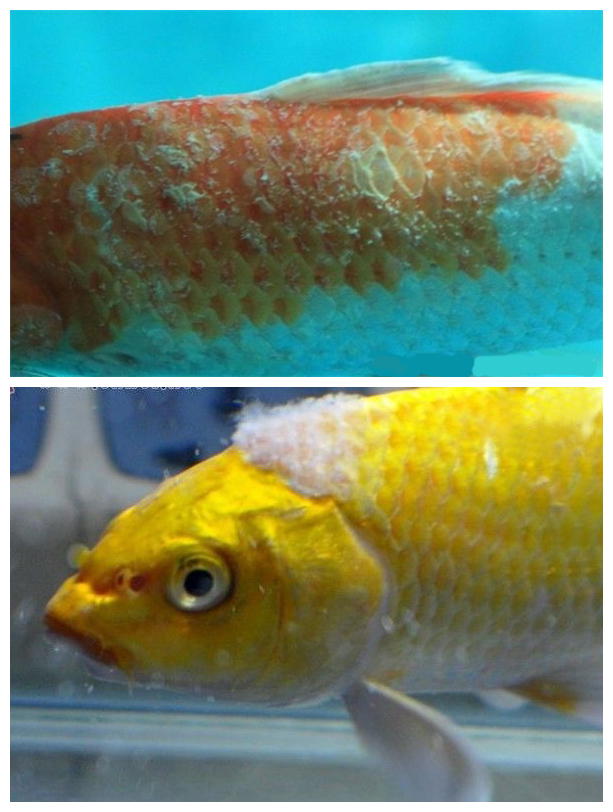
At the initial stage of parasitism, generally no abnormal symptoms of the diseased fish can be seen. When symptoms become visible, the mycelium has already invaded the fish's wound, growing outward, and a large amount of cotton-like mycelium grows at the affected site, like clusters of white hair.
Sometimes, due to infection by parasites, bacteria and other pathogens, the primary lesion ulcerates, and the mold's zoospores invade from the ulcerated area of the fish body, absorb nutrients from the skin, rapidly multiply, spread and expand at the injured lesion, and gradually grow cotton-like mycelium.
The mycelium becomes tangled and adhered to the cellular tissue of the wound, causing skin ulceration and tissue necrosis. At the same time, as the lesion area expands, the fish swims abnormally, loses appetite, and becomes emaciated, and ultimately the diseased fish dies from physical exhaustion.
If seining and fishing operations are performed improperly, it can also trigger an outbreak of saprolegniasis.
(1) When scooping upkoiand placing them into the pond or during other operations, be as careful as possible to reduce the chance of injuring the fish, and try to avoid handling fish at water temperatures below 15°C to prevent the fish from getting frostbitten
or scratched.
(2) Soak the fish in a salt water solution for 8 to 10 minutes before putting them into the pond.
( 3) Splash the whole pond with a mixture of salt and baking soda (1 : 1).
( 4 ) Splash methylene blue for symptoms over the whole pond, use it once more after 2 days, and after 5 days splash a hydantoin-type drug once.
( 5) Intramuscular injection of 15 mg of streptomycin per kilogram of body weight.