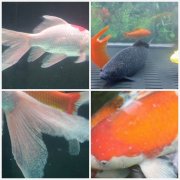
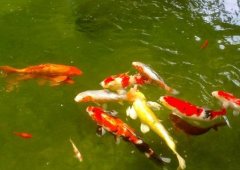
The German Tricolor Koi is a scaled-reduced koi variety with a white base and red and black markings.
The German Tricolor Koi is a rather distinctive variety among koi. While retaining the white base, red patches and black markings characteristic of tricolor koi, it also incorporates the scale-type traits of German carp. The so-called German carp originates from the mirror carp and leather carp lines, which have sparse scales or no scales at all. After crossbreeding and selective breeding with Japanese koi, a series of varieties such as the German Red and White, German Showa and German Tricolor gradually took shape.
In appearance, this type of fish has a white base color, with red and black patches distributed over the body surface, and the red, white and black three-color combination is sharply contrasted. Because the scales are sparse, some individuals grow only a small number of large scales along the back and lateral line, and some are even completely scaleless, with smooth, fine skin, making the edges of the markings appear clearer and more complete. This is also the main feature that distinguishes it from ordinary tricolor koi.
When keeping them, the German Tricolor Koi has water quality requirements similar to other koi. It prefers clean water rich in dissolved oxygen. In daily care, the water should be changed regularly and the filtration system kept running properly to avoid the accumulation of leftover food and feces fouling the water. Feeding should mainly use dedicated koi feed, with fixed times and amounts, and the amount fed should be appropriately reduced when the water temperature is on the low side.
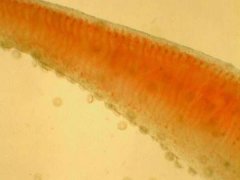
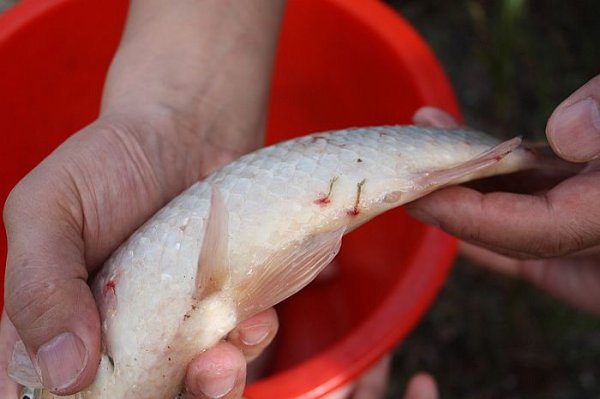
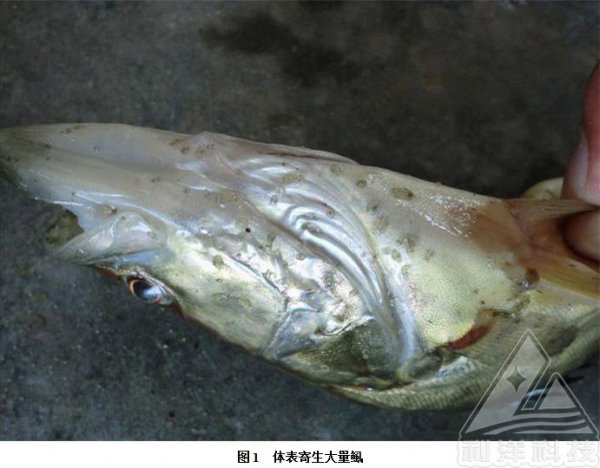
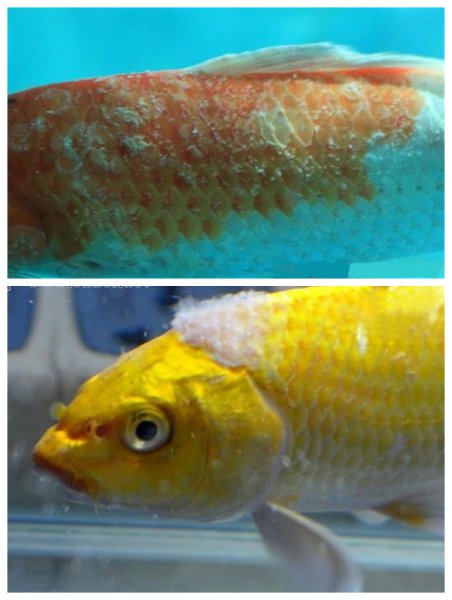
Because the scales are sparse and the skin is in direct contact with the water, this variety is relatively sensitive to water quality fluctuations, so disease prevention must be taken seriously during keeping. White spot disease, Chilodonella, Lernaea and others are all common koi diseases, mostly related to deteriorating water quality or pathogens carried by new fish. Normally, pay attention to the fish body surface and swimming behavior. If abnormalities such as rubbing against the tank, a white film on the body surface or reduced appetite are found, they should be dealt with promptly. Isolating and observing new fish for a period before introducing them into the pond can effectively reduce the risk of cross-infection.
Related Reading