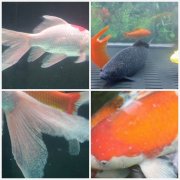
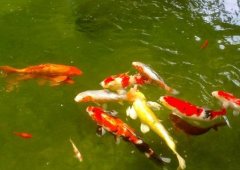
The German Red-and-White Koi is a few-scaled variety of Red-and-White Koi kept as an ornamental fish.
The German Red-and-White Koi is a branch of the Red-and-White Koi lineage, developed by crossing few-scaled carp such as the German Mirror Carp and Leather Carp with ordinary Red-and-White Koi. It retains the classic ornamental feature of Red-and-White Koi, a white base with red patches, while also carrying the scale form unique to German carp, and it is fairly common in the aquarium market and at koi shows.
Compared with ordinary Red-and-White Koi, its most obvious trait is that it has few scales or is even essentially scaleless, with only a scattering of a few large scales along the dorsal ridge and near the lateral line, giving the skin a smooth, delicate look. Its body is rather stout, and by bloodline it inherits the German carp's advantage of faster growth. When judging it, besides requiring that the red patches and white base have clear boundaries and even distribution, skin luster and the smoothness of the body shape are also valued.
The keeping method is basically the same as for ordinary koi, with the key being good water quality. The pond or tank should be equipped with a complete filtration system, water should be changed regularly, and the water kept clean; feeding should be done at fixed times and in fixed amounts, with the amount appropriately reduced when the water temperature is on the low side. Because it has fewer scales and relatively delicate skin, care should be taken when netting and transporting it to avoid abrasions that could lead to infection.
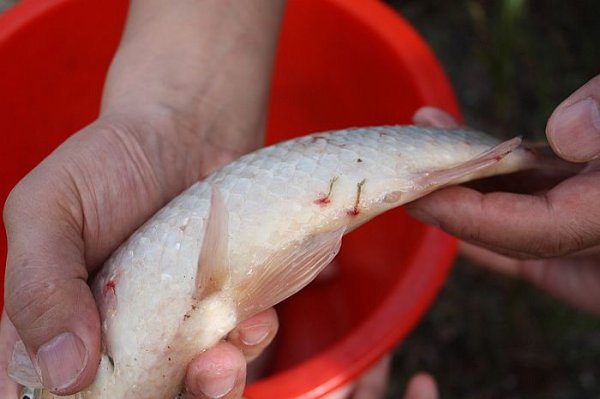
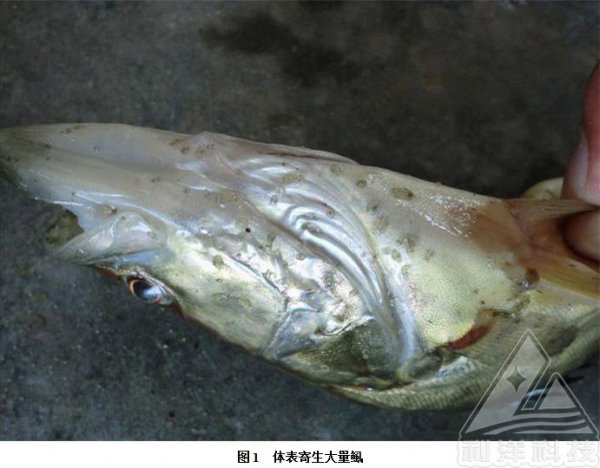
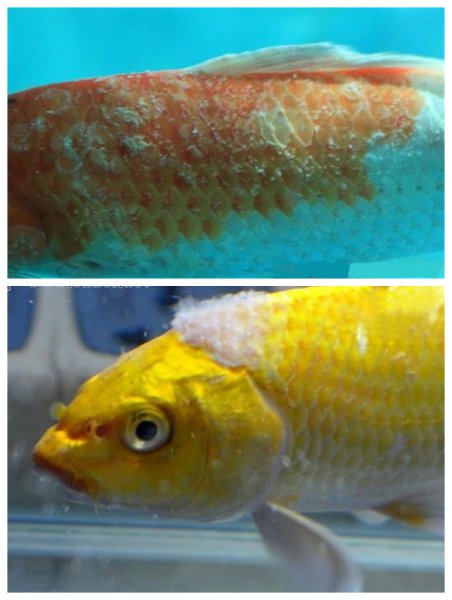
In daily management, watch the fish's condition; external parasitic diseases such as white spot disease, anchor worm, and fish lice are fairly common on koi. If the fish are seen frequently rubbing against the tank or bottom, or white spots or abnormal red spots appear on the body surface, or their appetite worsens, they should be isolated promptly and the cause identified so that targeted treatment can be given, preventing the disease from spreading and affecting the whole pond of fish.
Related Reading