What Kind of Fertilizer Is Monoammonium Phosphate and Key Application Points
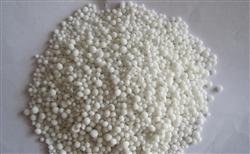
Monoammonium phosphate, abbreviated as MAP, is a high-concentration nitrogen-phosphorus compound fertilizer made by neutralizing phosphoric acid with ammonia. It generally comes as white or light gray granules or powder, dissolves easily in water, and has a high nutrient content. It is one of the common basic raw materials used to produce various nitrogen-phosphorus-potassium compound fertilizers and is very widely used in agricultural production.
Its most prominent feature is that it is high in phosphorus and low in nitrogen, usually containing around 10 percent nitrogen and up to more than 40 percent phosphorus (calculated as phosphorus pentoxide), mainly in the form of water-soluble phosphorus, so its fertilizer effect comes on relatively quickly. Compared with diammonium phosphate, it contains more phosphorus and less nitrogen, is relatively stable in nature, and is not strongly hygroscopic, making it easy to store and transport.
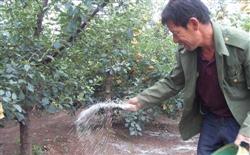
In terms of application, monoammonium phosphate can be used as a base fertilizer, seed fertilizer, and early topdressing. When used as a base fertilizer, band application, hole application, and appropriate deep placement are recommended, concentrating the nutrients near the root system for better results; when used as a seed fertilizer, the amount should be controlled to avoid direct contact between the fertilizer and the seeds. Because of its good water solubility, it is also suitable for fertigation, drip irrigation, and other integrated water and fertilizer management.
It should be noted that monoammonium phosphate has an acidic reaction and should not be stored or applied together with alkaline materials such as plant ash or lime, so as to avoid ammonia volatilization and a decline in phosphorus availability. When used heavily on acidic soil over a long period, it can be combined with organic fertilizer to build up soil fertility. At the same time, because it has little nitrogen and much phosphorus, in actual application it generally still needs to be combined with nitrogen fertilizer and potassium fertilizer according to crop requirements to achieve balanced nutrient supply.
Related Reading