What Is a Natural Urea Synergist? A Detailed Explanation Is Here
What is a natural urea synergist? Please give an introduction. China's agricultural consumption of urea nitrogen fertilizer is close to 20 million tons per year (pure nitrogen). Urea nitrogen fertilizer lost through gaseous volatilization, leaching and runoff reaches 10 million tons, equivalent to more than 21 million tons of urea, with direct economic losses of 45 billion yuan, not only causing energy...
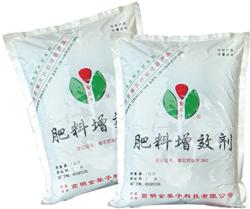
What is a natural urea synergist? Please give an introduction
China's agricultural consumption of urea nitrogen fertilizer is close to 20 million tons per year (pure nitrogen). Urea nitrogen fertilizer lost through gaseous volatilization, leaching and runoff reaches 10 million tons, equivalent to more than 21 million tons of urea, with direct economic losses of 45 billion yuan, not only causing huge waste of energy and resources, but also posing a great threat to the environment. In 2011, China's nitrogen fertilizer output (expressed as pure nutrient, the same below) reached 41.79 million tons, of which urea output was 26.567 million tons, accounting for 63.6% of total nitrogen fertilizer output.
Developing new value-added urea products with high production capacity, low cost, high utilization rate, low losses, good yield-increasing effects and environmental friendliness is of great significance in saving resources, achieving coordinated development of agricultural production and ecology, reducing costs and increasing efficiency, and saving energy and reducing emissions.
Value-added urea is a urea value-added product produced by adding simple equipment and directly adding a synergist to the urea solution without basically changing the urea production process. A synergist refers to a substance obtained by modification of natural materials such as seaweed, humic acid and amino acids that can improve the utilization rate of urea nitrogen fertilizer. Value-added urea products have the characteristics of high production capacity, low cost and good effects.
Value-added urea products should comply with the following principles: the nitrogen content shall not be less than 46%, meeting the national standard for urea products; a quality standard for value-added urea with added synergists can be established and has conventional testability; the synergist is highly effective in trace amounts, with an addition amount between 0.5% and 5%; the process is simple and the cost is low; the synergist is a natural substance and its extract or synthetic product, harmless to the environment, crops and the human body. After nearly 10 years of effort, the new fertilizer team of the Chinese Academy of Agricultural Sciences has developed a series of urea synergists such as fermented seaweed liquid, zinc humic acid and cereal extract, and corresponding series of new value-added urea products.
Alginic acid synergist uses seaweed as the main raw material and is a small-molecule fermented seaweed liquid synergist prepared by microbial fermentation. Alginic acid urea products are produced using the conventional urea process, with a synergist addition amount of 10-30 kg per ton of urea. The organic substances and physiologically active substances contained in the fermented seaweed synergist, such as alginic acid, indoleacetic acid, gibberellin and naphthaleneacetic acid, can promote crop root growth, improve root vitality and enhance the ability of crops to absorb nutrients; they can inhibit soil urease activity and reduce ammonia volatilization loss from urea; the substances in the fermented seaweed synergist liquid react with urea and delay the release and transformation process of urea in soil through hydrogen bonds and other forces. In addition, alginic acid urea can also play a role in drought resistance, salt-alkali osmotic resistance, cold tolerance, sterilization and improving the quality of agricultural products. The color of alginic acid urea is light yellow to light brown, the nitrogen content is >=46%, the alginic acid content is >=0.03%, the urea residue difference rate is >=10%, and the ammonia volatilization inhibition rate is >=10%.
Zinc humic acid synergist uses weathered coal and lignite as the main raw materials. Through microbial fermentation technology, it extracts high-molecular active humic acid and prepares a urea synergist through chelation technology. The addition amount is 10-50 kg per ton of urea, and zinc humic acid urea products are produced using the conventional urea process. The highly active humic acid contains a large number of active groups such as carboxyl, phenolic hydroxyl and carbonyl groups and the trace element zinc, which can promote crop growth, enhance photosynthesis and have a good inhibitory effect on soil urease activity; it reacts with urea to produce zinc humic urea, slowing the decomposition and release rate of urea in soil. In addition, zinc humic acid urea can also improve soil, build soil fertility and supplement and activate soil trace elements. The color of zinc humic acid urea is brown to black, the nitrogen content is >=46%, the humic acid content is >=0.15%, and the humic acid precipitation rate is <=40%.
Cereal extract synergist is a urea synergist produced through chelation technology using natural glutamic acid as the main raw material through polymerization reaction. The addition amount is 10-30 kg per ton of urea, and cereal extract urea products are produced using the conventional urea process. Glutamic acid in cereal extract is the amino acid with the highest content in plants. At the same time, glutamic acid is a precursor for the synthesis of various amino acids in plants and plays a vital role in the growth and development of plants. Glutamic acid can form glutamine in plants, store nitrogen and eliminate the toxic effects caused by excessively high ammonia concentration. Therefore, this value-added urea product can promote crop growth, improve the storage form of nitrogen in crop plants, reduce the harm of ammonia to crops, improve nutrient utilization rate and supplement soil trace elements. The color of cereal extract urea products is white to light yellow, the nitrogen content is >=46%, the glutamic acid content is >=0.08%, and the ammonia volatilization inhibition rate is >=10%.
Click to get more nitrogen, phosphorus and potassium application techniques
Click to get more chemical fertilizer application techniques