Severe Potassium Loss After Flooding Makes Potassium Supplementation Essential for Crops
In past years, in several provinces along the middle and lower reaches of the Yangtze River, potassium deficiency symptoms were commonly seen in crops such as cotton, rice, corn, soybeans, and peanuts. Apart from some soils being inherently low in potassium, this was largely related to the heavy rainfall during the crop growing season this year, which caused considerable potassium loss. In cotton, most fields showed potassium deficiency...
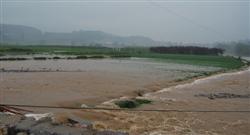
In past years, in several provinces along the middle and lower reaches of the Yangtze River, potassium deficiency symptoms were commonly seen in crops such as cotton, rice, corn, soybeans, and peanuts. Apart from some soils being inherently low in potassium, this was largely related to the heavy rainfall during the crop growing season this year, which caused considerable potassium loss.
In cotton, most fields showed potassium deficiency, with the lower cotton leaves developing yellow-white mottling early on, followed by reddening along the leaf margins and brown spots; in severe cases, the leaf edges began to scorch. In potassium-deficient rice, the old leaves showed reddish-brown spots on the surface, the leaf margins became scorched, and the stems were prone to lodging or even breaking. In potassium-deficient corn, the young leaves turned yellow, the plants were stunted, and the old leaf margins became scorched and brown. In potassium-deficient soybeans, the old leaf margins turned yellow, and some leaves shrank and curled downward while the middle of the leaf remained green. In potassium-deficient peanuts, the leaves were pale green and the leaf margins became scorched. The common feature of potassium deficiency in these crops is that the tips of the lower leaves turn yellow and gradually wither along the leaf edges, while the areas on both sides of the veins and the middle of the leaf remain green; in severe deficiency, most leaf margins become withered-yellow or scorched.
Potassium fertilizer has many functions during crop growth and development: First, it can increase the turgor pressure of crop cells, making them more elastic, and can control the opening or closing of stomata in leaf cells, which helps crops absorb more carbon dioxide, produce carbohydrates, and form sugars and starch. Second, it can promote root development, absorb more water, alleviate water evaporation, and correspondingly improve crop drought resistance. Third, potassium is mainly present in stems and leaves, and can promote the development of stem cellulose, enhance the supporting capacity of stems, and strengthen resistance to lodging, pests, and diseases. Fourth, potassium plays an important role in the transformation and transport of nutrients within the crop, and can accelerate the absorption and utilization of other nutrient elements. Fifth, it can significantly increase crop yields; for example, applying more potassium fertilizer to insect-resistant cotton can greatly increase yield and also improve crop quality.
In view of the widespread potassium deficiency in crops this year, potassium fertilizer must be supplemented in a timely manner.
First, potassium fertilizer application should be differentiated according to soil type. Applying potassium fertilizer to soil generally increases yield, but the extent of the increase varies with different soils. After potassium fertilizer is applied to the soil, clayey soil can adsorb more potassium and lose less, while sandy soil has poorer adsorption capacity and readily available potassium is easily lost. Therefore, clayey soil can be given a larger single application of potassium fertilizer, while sandy soil shows obvious yield increases from potassium application but should be applied in split doses.
Second, application should be based on different crop types. Crops have relatively good compatibility with potassium fertilizer, but because the composition of potassium fertilizers is not entirely the same, some components can inhibit the growth and development of certain crops. For example, tobacco, potatoes, watermelon, and tea are very sensitive to chloride ions, and if potassium chloride is applied, the yield of these crops will decrease and quality will deteriorate. If potassium sulfate is used as a topdressing for these crops, it can both increase yield and improve efficiency. However, potassium chloride gives relatively good results when applied to crops such as cotton, rice, corn, and soybeans.
Third, pay attention to application techniques. Faced with the current situation of excessive rain and considerable potassium loss this year, potassium fertilizer must be quickly topdressed on potassium-deficient crops. First, for crops with wide row spacing and a long growth period, potassium sulfate can be applied as a topdressing in furrows or holes between rows at about 10 kg per mu. Second, foliar spraying can be done with a 0.2%-0.3% potassium dihydrogen phosphate solution or a 1% potassium sulfate solution, or a mixture of 1% urea and 1% potassium sulfate. Third, based on the actual market conditions in each area, select and prepare foliar potassium fertilizers with high content and proven local effectiveness for spraying.