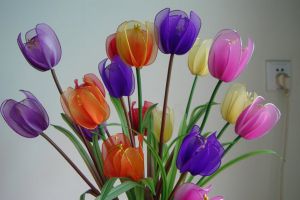
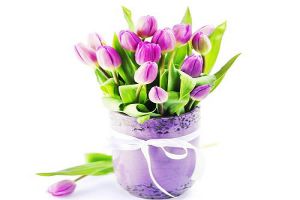
The flower meaning of purple tulips symbolizes nobility and endless love.
The tulip is a perennial bulbous flower of the genus Tulipa in the lily family (Liliaceae). Purple varieties have elegant flower colors and carry an inherently noble, serene temperament. Among the more widely circulated interpretations of flower meanings, purple tulips represent noble love and endless love, and are also often read as carrying a touch of mystery and melancholy. Understandings of flower colors differ slightly from region to region, but nobility and elegance are basically its universally recognized dominant tone.
Precisely because its meaning is solemn and beautiful, the purple tulip is suitable for expressing admiration and cherishing, and it is very appropriate as a gift for elegant friends, elders or work partners. In floral arrangements, planting it together with light-colored tulips such as white and yellow ones gives clearly defined color layers and a very striking ornamental effect.
There are quite a few purple tulip varieties, with flower colors ranging from light purple, blue-purple to deep purple that is nearly black; among them, the varieties with extremely dark petals are often called Night Queen (Queen of Night), and they are especially eye-catching when in bloom. Different varieties have different early or late flowering periods, and mixing them in planting can make the overall ornamental period longer.
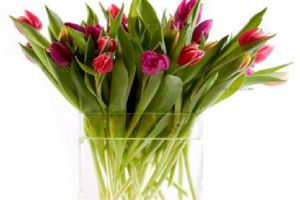
In terms of care, tulips prefer a cool climate and dislike high temperatures and high humidity. The bulbs are mostly planted in autumn, and after vernalization through low winter temperatures they bloom in spring. During the growing period they need ample light and well-drained soil. When grown indoors, they should be placed in a bright, well-ventilated location. After hydroponically grown tulips finish flowering, the spent flowers should be cut off promptly, and the bulbs should continue to be grown on or transferred to soil culture to help the bulbs accumulate nutrients, so that there is a chance of reblooming the following year.
Related Reading