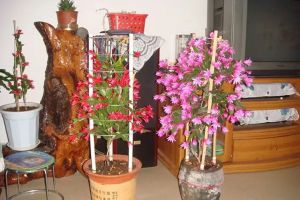
Moss rose is easy to grow and readily spills over the pot; mastering its characteristics and how to care for and propagate it is the key
Moss rose, whose botanical name is Portulaca grandiflora, is a succulent herbaceous plant in the genus Portulaca of the family Portulacaceae, and is also known among gardeners as "the undying", "Semi-branch lotus" and "pine-leaf peony". Its stems and leaves are thick and juicy, and its flowers come in single and double forms, with a rich range of colors, commonly red, pink, yellow, white and various bicolors. Moss rose opens its flowers in response to light, and the more light it gets, the more vigorously it blooms, which is how it got its name. It should be noted that the "sunflower" referred to in everyday speech sometimes means the common sunflower (Helianthus annuus); the two are not the same plant.
Propagating moss rose is very simple, and both cuttings and sowing are commonly used. For cuttings, snip off healthy stems, let the cut ends dry, then insert them into loose sandy soil and keep the soil slightly moist; they will quickly take root and survive. Sowing is mostly done in spring; the seeds are tiny, so simply scatter them and lightly cover with a thin layer of soil. Because it is so tenacious, even a stem that is pinched off and casually tossed onto the soil surface can take root and grow if conditions are suitable, which is why it is called "the undying".
As for care, moss rose likes a sunny, warm and dry environment, is drought-tolerant and afraid of waterlogging, so watering should favor dry over wet, avoiding long-term water accumulation in the pot that causes root rot. A loose, breathable sandy loam is best, and adding a suitable amount of phosphorus and potassium fertilizer during the growing season will make it bloom more and more brilliantly. After flowering, promptly remove spent flowers and pinch back the tips appropriately, and the plant will be more compact, with more branches and more flowers. The stems of old plants grown for many years gradually become woody, and can even be trained into quite ornamental moss rose old stumps.
Common problems are mostly related to light and water. When light is insufficient, the plant tends to grow leggy and bloom sparsely; when watered too much, it is prone to root and stem rot. Put it on a south-facing balcony or terrace, give it plenty of sun and little water, and moss rose can keep blooming from early summer all the way to late autumn.
Related reading