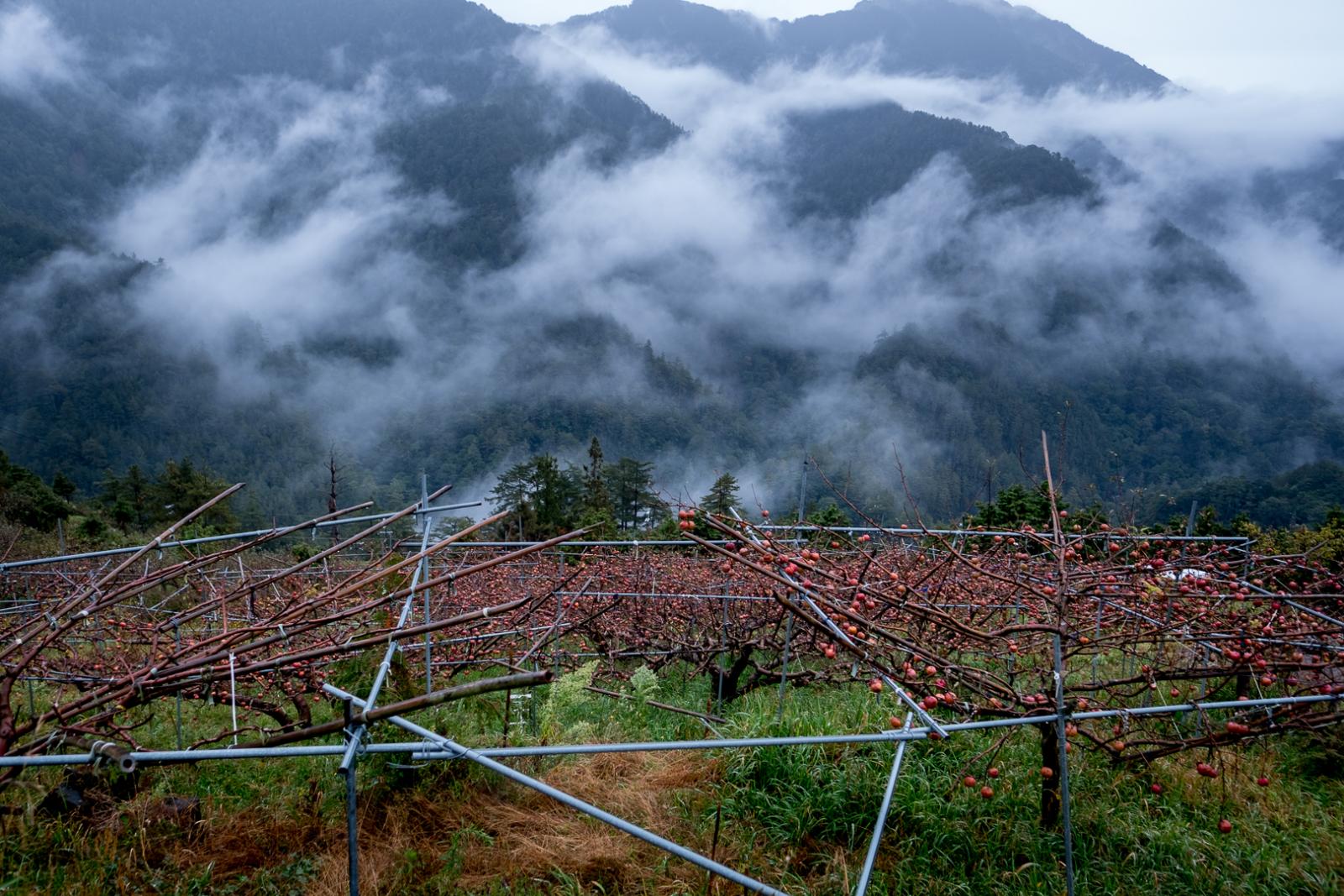
Key Seasonal Tasks and Hand-Pollination Methods for Apple Growing
What are the four seasons of work like for apple farmers, and is it the same as potted apple growing techniques? Let's take a look together!
Before the apple trees bloom at the end of March, the growers begin "spraying", though "spraying" actually means applying fungicides, insecticides, and other agricultural chemicals to the trees to prevent and treat pest and disease problems. Conventional growers typically spray once every seven to ten days depending on weather changes, and apply top-dressing fertilizers of different formulas for each growth stage, all the way until September, while the apple harvest falls between mid-October and early November.
The work does not stop there. Taking advantage of the brief blooming period, some growers pollinate the trees by hand themselves, and even buy expensive imported pollen to dab onto the stigma of the apple flower's pistil to increase the chance of successful pollination. The apple orchard where Akai works has limited manpower, and he also does not consider dabbing pollen to be necessary work. Instead, he relies on nectar-source plants such as wild flowers and herbs in the orchard to attract wild bees to reside there year-round, helping pollinate when the trees bloom; in addition, most orchards have a consensus to stop spraying insecticides during the blooming period, so as not to harm the bees and thereby hinder pollination of the trees.
At the same time, another task for Akai in early spring is watering with root-stimulating fertilizer, applying self-fermented liquid fertilizer rich in beneficial bacteria and nutrients, in keeping with the solar term when the trees wake from dormancy, watering it into the soil in several rounds depending on weather conditions, so that the roots grow better. Later, when the trees begin to set fruit in May, the grower must busy himself with fruit thinning; the young fruitlets grown from the flower receptacle are best removed while they are only the size of a little finger. Since apple blooming is divided into early, middle, and late flowers, and although nutrient distribution gives the most to early-flower fruit, when thinning, growers usually keep the fruit set from early and middle flowers according to the fruit load, while late-flower fruit tends to be smaller and prone to growing into misshapen fruit and ripening slowly; however, if fruit set is poor due to climatic factors, the fruit set from late flowers will also be kept.
As the weather turns hotter, different varieties of apples begin to turn red, green, or yellow. What the growers must worry about is not only weather changes, but also the problem of leaf drop. Apples have four or five kinds of early defoliation diseases; if poorly controlled, leaf drop begins in July and August, and because the trees cannot accumulate nutrients due to insufficient photosynthesis, the fruit cannot grow large, turn sweet, or easily ripen. This is also why apple growers dare not stop spraying too early; after all, renting a one-hectare apple orchard in the mountains often costs over a million in rent, and any possible risk that could affect the harvest is hard for them to bear.