Detailed Explanation of Standardized Cultivation Techniques for Daohuaxiang 2 Rice
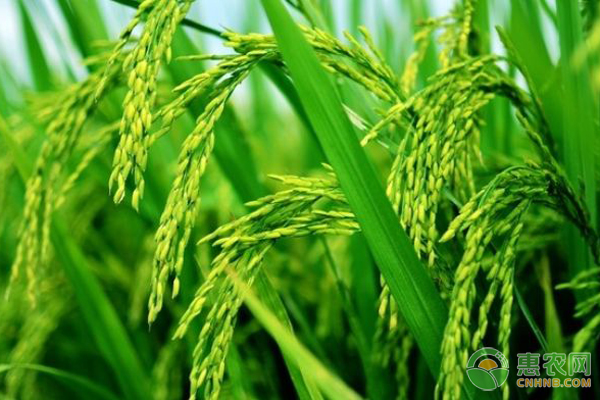
Daohuaxiang 2 is a high-quality rice variety in our country and belongs to the japonica rice group. The grains are oval in shape, with a fragrant, soft and glutinous taste and high nutritional value. It is deeply loved by the people. Below, let us take a look at the standardized cultivation techniques for Daohuaxiang 2 rice!
1. Estimated Yield Target
Target yield: 0.8 wan kg per mu. Yield composition: 17~18 hills per sq m, 20~21 effective panicles per hill, 95 filled grains per panicle, and a grain weight of 26 grams.
2. Core Technical Measures
2.1 Variety Selection
Select a variety with a growth period of 138~140 days, plant height of 105~110 cm, average grains per panicle of 100~110, grain weight of 26.5 grams, yield potential of 8000 KG per mu, and resistance to rice blast.
2.2 Cultivating Strong Seedlings
2.2.1 Seedling throwing in greenhouse trays: seeds 35~40 KG (quality requirements: purity 99%, cleanliness 98%, germination rate above 90%). Before soaking the seeds, sun-dry them for 2~3 days. Use salt water with a specific gravity of 1.13 for seed selection (put 10~12 KG salt into 50 KG water; a fresh egg should protrude 1 cubic cm above the water surface), so that seed plumpness reaches 100%. After salt water selection, immediately rinse with cold water 2~3 times. Soak in cold water for 5~7 days, with accumulated temperature reaching 100 days. The soaked seeds are sprouted at 25°C~32°C for 36~48 hours; a bud length of 1 mm is suitable. High temperature for breaking the hull (32°C), warm temperature for sprouting (25°C), and low temperature for drying the buds (15°C). After sprouting, 40 KG of sprouted seeds are coated with 100 ml of 6.25% Liangdun, dried for 24 hours, and then sown.
Select a seedling-raising site that is flat, fertile, low in soil temperature, downwind and sunny, and convenient for irrigation. For long-term soil improvement and fertility, in the seedling field after transplanting, use 1.5 cubic m of high-quality farm manure, and apply 60~70 grams of diammonium phosphate per sq m beside the seedling bed. The ratio of seedling field to field is 1:80~100. Prepare bed soil in autumn, and pile the paddy soil for composting as needed for use the following year. During composting, the corresponding amount of organic fertilizer can be added directly (soil to organic fertilizer ratio 4:1), and the surface can be sealed only with butachlor and then covered with film for bed soil preparation. Paddy soil and peat 3:1, or paddy soil and composted manure 4:1, 2 KG of bed soil per tray, with about 1000 KG of soil prepared per mu. Each mu requires 500 trays of 434-hole seedling trays or 550 trays of 352-hole seedling trays. Cover the greenhouse in advance to thaw the bed soil and increase soil temperature. Cover the greenhouse on March 25. When the average temperature steadily passes 5°C, sowing is generally done from April 8~10, with a sowing rate of 3~4 grains per pot; after sowing, cover with sieved fine soil 1 cm deep so that no seeds are exposed.
2.2.2 Seedling Stage Management: Keep sealed and insulated before emergence; after emergence 25°C~28°C; at the 1.5-leaf stage not exceeding 25°C; from 1.5-leaf to 3-leaf stage 20°C~25°C; 5~7 days before transplanting, remove the greenhouse skirt and ventilate naturally to harden the seedlings. Because pot-tray seedlings contain little soil, they easily suffer water shortage. The sign of water shortage is whitening of the bed surface, and seedling leaves wrinkle during ventilation. Before rice emergence, keep the bed soil moist; from emergence to the 1.5-leaf stage, control irrigation; after the 1.5-leaf stage, irrigate appropriately as needed. For pot seedling raising, because the soil nutrient space is small, fertilizer is easily lost after the 2-leaf stage, so fertilizer should be applied appropriately. At the 2.5-leaf stage, apply 1 bag (1000 grams) of special seedling-stage fertilizer per 200 trays of seedlings. When barnyardgrass in the rice field is at the 1.5-leaf stage, use 10 ml of 10% Ganjin (cyhalofop-butyl) emulsifiable concentrate plus 30 ml of 48% bentazone per 100 sq m of seedling field, diluted with an appropriate amount of water and sprayed; safety is good. At the 1.5-leaf stage of the seedlings, spray 50 ml of 30% Ruimiaoqing per 50 sq m of seedling field.
2.2.3 Preparation Before Transplanting: 2 days before transplanting, take the three belts to the field. Belt fertilizer: apply 100 grams of diammonium phosphate per sq m of rice field; belt pesticide: to prevent leafminer, use 70% Fanxile 6~8 grams per 100 sq m or 25% Lusitai 6~8 grams per 100 sq m, add 5 KG water and spray. Belt rooting agent: spray with 5000-fold dilution of Bihu (gibberellin · brassinolide · indoleacetic acid mixture).
2.3 Mechanical Tillage
The plowing depth of paddy fields should be 15~16 cm; clay soil may be deeper, and sandy loam may be shallower; the rotary tillage depth should reach 13~14 cm or more, combining plowing and rotary tillage. For water tillage, the requirement is that the height difference not exceed one cun, and one cun of water does not expose mud; after suitable settling, transplant.
2.4 Transplanting
When the average temperature steadily passes 13°C, begin transplanting, generally from May 10~25; the best transplanting period is May 15~25. The transplanting density should be 30 cm row spacing and 18~20 cm hill spacing. The amount of seedlings used per mu is 430~450 trays of 434-hole seedling trays or 500 trays of 352-hole seedling trays.
2.5 Formula Fertilization
Fertilizer application amount: pure nitrogen 145 KG per mu, pure phosphorus 80 KG per mu, pure potassium 120 KG per mu, zinc sulfate 25 KG per mu. Base fertilizer: before plowing, 45% of base fertilizer, 100% phosphate and potassium fertilizer, 75% potassium fertilizer. For base fertilizer, 46% (12-16-18) compound fertilizer is recommended, with a usage amount of 500 KG per mu. Topdressing: 150 KG urea per mu, 75 KG ammonium sulfate per mu, 50 KG potassium chloride. Tillering fertilizer on June 3~5: pure nitrogen 34.5 KG per mu, i.e. urea 75 KG per mu; supplementary tillering fertilizer on June 13~15: pure nitrogen 34.5 KG per mu, i.e. urea 75 KG per mu. Panicle fertilizer on July 12~13: pure nitrogen 15 KG per mu, i.e. ammonium sulfate 75 KG per mu; pure potassium 30 KG per mu, i.e. potassium chloride 50 KG per mu.
2.6 Scientific Irrigation
Carry out scientific irrigation according to the different growth and development stages of rice, namely shallow water for greening, shallow water for tillering, sunning the field when enough tillers are reached, sufficient water for booting, shallow water for heading, moist irrigation for grain filling, and draining when yellow-ripe. If low temperature occurs during the booting stage, irrigate deeply, with a water level of 15~20 cm. For field sunning, at the critical period of effective tillering of rice, drain and sun the field for 10~15 days to reduce the nutrient concentration in the soil, remove harmful substances in the soil, and control ineffective tillering; the time is generally June 25~July 10.
2.7 Integrated Prevention and Control of Diseases, Insects, and Weeds
Seal and weed before rice transplanting. 1~2 days after harrowing, seal with 500 ml of 50% Ruifeite per mu; transplant 2 days after sealing. After rice turns green, use 750 ml of 50% Ruifeite plus 300 grams of 30% bensulfuron-methyl combined with tillering fertilizer and mixed with urea. In the middle and later stages, if broadleaf weeds such as Arrowhead, Monochoria, and Ducktongueweed appear, they can be prevented by spraying 1000 ml of 2.5% Daojie (penoxsulam) per mu. For rice blast, use 1500 ml of 40% Boshi No. 1 per mu plus 500 ml of 2% Lingshoumi per mu or 450 grams of 75% (Daoyan) tricyclazole per mu plus 500 ml of 2% Lingshoumi per mu to prevent panicle neck blast; spraying time is at the rice breaking stage. For striped stem borer, use 900 grams of 90% monosultap per mu or 150 ml of 20% Kangkuan per mu; the prevention time is determined according to the insect situation forecast of the agricultural science and technology department. For rice water weevil and rice weevil, use 750 ml of 48% Lesiben (chlorpyrifos) per mu, add water and apply by splashing or spraying.
2.8 Lodging Resistance Technique
At the late tillering stage of rice, use the dwarfing and stem-strengthening agent Ailifa, with a requirement of 15 bags per mu, mixed with fertilizer and applied as topdressing, to strengthen the basal internodes, making the basal internodes shorter and wider, thereby improving rice lodging resistance.
2.9 Mechanical Harvesting
When all grains have hardened, the panicle axis is dry on top and yellow below, and grain maturity reaches 95%, and rice moisture drops below 16%, harvest immediately with a combine harvester. When harvesting, leave 25 cm high stubble for comprehensive straw utilization, increase soil organic matter, and improve soil organic matter.
The above is all the detailed introduction to the standardized cultivation techniques for Daohuaxiang 2 rice. The rice produced by Daohuaxiang 2 rice has very plump grains, rice color as bright as a mirror, shining like jade, a soft and chewy taste, and the rice is very sweet. This performance is all because the original nutrients are kept from flowing out. If you want to grow this rice, do not hesitate.