Causes and Control Methods of Rice Sheath Blight in Southern China
Sheath blight is a common disease in rice cultivation, and its damage is severe. Once it occurs and prevention is not timely, it can cause rice to wither and die, reducing rice yield. So what causes rice sheath blight? Below are the detailed causes and control measures of rice sheath blight. We hope this is helpful to all growers.
1 Causes of rice sheath blight
The pathogen of rice sheath blight is mainly Rhizoctonia solani. Under basic conditions, observation shows that the fungus is initially colorless, and light brown sclerotia appear when it matures. The sclerotia of the pathogen have strong drought resistance and can survive in various extreme environments, and are the main pathogenic agent for the large-scale spread of rice sheath blight. In addition, excessive rice planting density, poor fertilizer and water management, and unscientific chemical control measures can all lead to sheath blight and reduce control efficacy.
2 Occurrence characteristics of rice sheath blight
Rice sheath blight is a disease caused under high temperature and high humidity conditions. When the field temperature in the rice planting area rises continuously (about 20 °C, humidity at 80%), sheath blight begins to develop and spread gradually. When the field temperature in the planting area exceeds 25 °C and the air humidity exceeds 90%, the rapid spread of the disease will continue to accelerate. Long-term standing water in rice fields and high humidity provide the basic conditions for the large-scale occurrence and spread of sheath blight. If too much nitrogen fertilizer is applied during fertilization management, the seedlings will head and close the rows earlier, promoting the occurrence of sheath blight. Under normal planting conditions, there are certain differences in the actual disease resistance and incidence rate of different varieties; tall-stalked rice varieties have a lower incidence rate, while short-stalked rice suffers more severe disease.
3 Basic symptoms of rice sheath blight
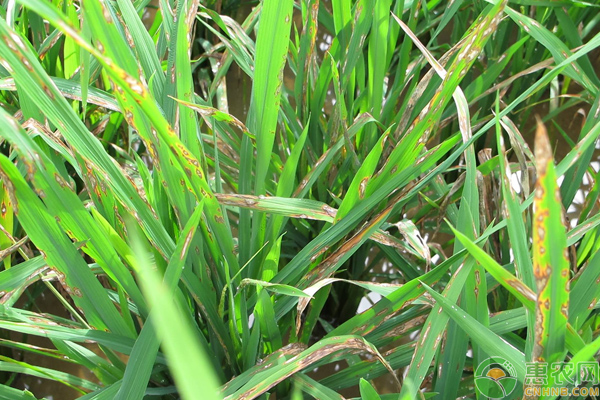
Sheath blight causes varying degrees of damage to rice leaf sheaths, leaves, panicles and stems. The initial stage mainly occurs on the leaves and leaf sheaths close to the plant and the water surface. During the early infection process of rice, most diseased parts show dark green water-soaked indistinct spots, and after the lesions further spread, they gradually form cloud-like patterns. The middle part of the lesion appears light green or dark red, and after the rice tissue is damaged, the edge appears dark brown. When the disease is relatively severe, several smaller lesions merge to form larger lesions, causing the leaves to begin to turn yellow and then gradually wither. Damage to the stem is relatively similar to that of the leaves. When the panicle is damaged, it initially appears dark green, and as the damage lasts longer, it appears dark red, and the rice cannot head normally. In a growth environment with high temperature and high humidity, sclerotia appear on the diseased parts of sheath blight; the sclerotia are darker in color and fall off easily.
4 Occurrence pattern of rice sheath blight
Rice sheath blight is a fungal disease. The sclerotia of the pathogen overwinter in the planting soil, diseased parts of rice straw, weeds and other environments, and are the basic source of the disease. When plowing in spring, most sclerotia that successfully overwinter float on the water surface and then attach to rice plants. When the geographical environment temperature is relatively suitable, the sclerotia continue to germinate, produce fungi, infect rice, and cause rice disease, while under high temperature and high humidity conditions, they can cause an epidemic outbreak of rice sheath blight. After rice planting, the disease occurring too early, too much, and too severely is a common situation in current rice-growing areas.
5 Comprehensive control measures for rice sheath blight
5.1 Select varieties with good disease resistance
Rice cultivation mainly depends on the selection of rice varieties, because good varieties can block the pathogen and reduce the probability of disease occurrence. According to practical scientific research, the current wax protective layer of indica rice plants is relatively thick, with more silicified substances, and its actual disease resistance is good; indica rice is second, and glutinous rice has the worst actual disease resistance. Under the same planting environment, early-maturing varieties have lower disease resistance, while late-maturing varieties have better disease resistance.
5.2 Promptly remove the pathogen
Before rice transplanting, it is necessary to promptly scoop up the sclerotia floating on the water surface of the rice field to comprehensively reduce the number of inoculum sources. The operation is as follows: by raising the water level (water level height 3.3-6.6 cm) and harrowing the field, the sclerotia float on the water surface, and after staying for a period of time, the floating dry branches, weeds, sclerotia and other floating debris on the water surface are concentrated by the wind at low field corners and field edges, and then the floating dry branches, weeds, and sclerotia on the water surface are promptly scooped up with related tools such as sediment nets and then destroyed, thereby effectively controlling the total number of inoculum sources and effectively managing the early or late, mild or severe occurrence of the disease.
5.3 Fertilizer and water management measures
For fertilization standards in rice fields, fertilization should be based mainly on basal fertilizer, and topdressing can be applied promptly according to the growth pattern and specific growth conditions of rice. Basal fertilizer should be mainly organic fertilizer, with appropriate supplementation of chemical fertilizer according to the organic matter status of the soil; the principle is to control nitrogen fertilizer and apply phosphate and potassium fertilizer as topdressing. Topdressing should be mainly tillering and heading fertilizer, and should be carried out 7-10 d after transplanting, after the seedlings turn green; earlier is better than later. The appropriate fertilizer application amount is about 20% of the fertilization level.
5.4 Adopt other effective cultivation management measures
Cultivating strong seedlings, rational close planting, and ensuring basic seedlings are key supporting measures for maintaining rice disease resistance, high yield, and high quality, and are also effective measures for comprehensive control of sheath blight.
In addition, growers should apply sufficient basal fertilizer, fertilize effectively, apply phosphate and potassium fertilizer as topdressing, and not apply nitrogen fertilizer alone, which can not only promote rice growth and improve benefits, but also enhance the stress resistance and disease resistance of rice.
5.5 Chemical control measures
In the early stage of rice sheath blight, the disease develops relatively slowly, and in the middle and late stages it develops rapidly, so to control the disease, spraying must be done promptly. At the tillering stage, when the diseased clump rate is found to reach 5%-10%, chemical control can begin. During the late booting and heading stages, the disease develops rapidly, and control must be strengthened to manage the disease trend. For basic application, pesticides such as Jinggangmycin granules, benzyl propiconazole emulsifiable concentrate, and hexaconazole suspension concentrate can be used and sprayed with water. Each spraying must be applied twice consecutively; after the first spraying, apply the second about 7 d later, so that good control efficacy can be achieved. In addition, when spraying, pay attention to adding more water; only with sufficient spray liquid can a certain amount of spray liquid reach the lower part of the plant and improve control efficacy.
Rice sheath blight is caused by Rhizoctonia solani, and when the disease occurs, it spreads quickly. If prevention is not timely, it will harm an entire rice field, so all seed growers must pay attention when planting. The above are the causes and control measures of rice sheath blight in southern China, which all growers can refer to.