Detailed Explanation of Spring Grafting Techniques and Methods for Peach Tree Saplings
Peach is one of the key crops in the socio-economic development of orchards in our country, and its varieties are extremely diverse; the most popular on the market are generally peaches and honey peaches. With the enormous market prospects shown by peach trees, combined with continuously rising prices, peach trees are increasingly welcomed by growers. To ensure the quality of peach cultivation, peach sapling grafting techniques have become well known and applied in actual production and planting processes. Now the grafting methods for peach saplings are shared with everyone.
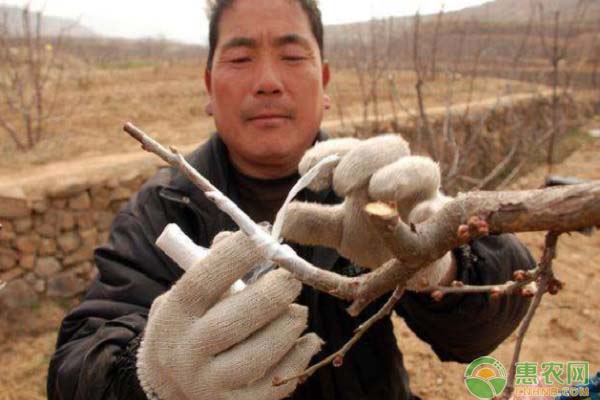
1. Grafting time. Peach trees can actually be grafted all year round, but generally speaking, the survival rate is higher when peach trees are grafted in spring and summer. The best time for spring grafting is from mid-February to mid-to-late April; summer grafting is from mid-May to early August; autumn grafting is generally carried out from late July to late September; and winter grafting is from October of the current year to mid-to-late January of the following year. It is suggested that everyone choose a suitable grafting time according to their own specific planting needs, so as to improve the success rate of peach grafting.
2. Grafting preparation. ① Selection of rootstock: not all fruit seedlings can be used to graft peach trees, and among rootstocks that can be used to graft peach trees, not all have such a high survival rate. Therefore, we must choose the best rootstock, and generally choosing different types of peach saplings is the best. ② Selection of scion: it is best to choose one-year-old, robust, disease-free and pest-free, strongly resistant, improved-variety peach branches. ③ Preparation of grafting tools: prepare commonly used grafting tools, mainly including plastic film, etc.
3. Grafting methods. In actual application, because rootstocks and scions of different sizes will be selected, the grafting methods for peach trees are not limited to a single one, and the specific methods that need to be mastered must also differ; otherwise it will directly affect the survival rate of peach grafting. The most commonly used methods are bud grafting and branch grafting. Bud grafting includes T-shaped budding and chip budding, and branch grafting includes cleft grafting and side grafting. During the grafting process, the grafting depth must be controlled well, and the rootstock and scion must also match each other, so as to improve the healing ability of the graft and thereby increase the survival rate of grafting. After the rootstock and scion are grafted well, they must be tied and wrapped with plastic film, which can prevent the rootstock and scion from being harmed by air and moisture, reducing healing ability and causing grafting failure.
4. Post-grafting management. If the graft survives successfully, new shoots will generally emerge in about fifteen days. During this period, carefully observe the growth status of the seedlings and remove the sprouting seedlings that have not been completely eliminated. In addition, after successful grafting, the binding plastic film must also be untied, and after a period of growth, appropriate pest prevention and fertilization can be carried out, and then it can enter a new growth stage.
In summary, grafting is the most common propagation method for peach saplings. Different types of peach trees such as wild peach, nectarine, and Pan peach are all relatively suitable for use as grafting trees for peach trees. Do a good job in the preparatory work before grafting, and at the same time select suitable grafting methods according to grafting standards, to avoid affecting the success rate of grafting.