Common Sweet Potato Pests and Control Methods
Sweet potato is a very good crop, and farmer friends who develop agriculture often plant it, but growing sweet potatoes greatly consumes the organic matter in the *soil. Generally, continuous cropping cannot exceed three years, and if you do not pay attention, sweet potatoes will also suffer from underground pests, resulting in reduced yield. So what pests affect sweet potatoes? How should they be controlled? Let us take a look together next!
1. What pests affect sweet potatoes? The larvae of scarab beetles, white grubs, will gnaw the roots and stems underground, causing seedlings to wither. Wireworms bite and eat the germinating buds, young roots, and tubers, causing bare-root seedlings to wither or tubers to rot. Mole crickets bite the roots of tubers into a tangled mess, causing bare-root seedlings to wither. The larvae of cutworms like to gnaw the stems of sweet potatoes, causing dead seedlings and missing plants. In addition, there are also more than a dozen kinds of underground pests such as root stink bugs, root aphids, root mealybugs, root longhorn beetles, and white ants, which cause very great harm to sweet potatoes. If farmer friends discover them, they must control them promptly.
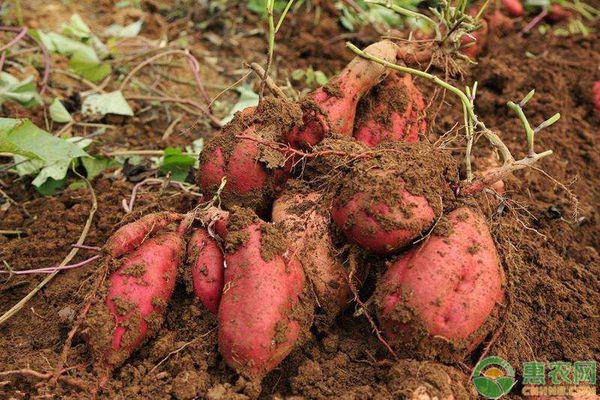
2. How should sweet potato pests be controlled? 1. Disinfect the *soil with quicklime. After harvesting sweet potatoes in autumn, spread more than 1000 jin of wheat straw and stalks on the ground per mu, sprinkle 50 to 100 kg of quicklime, then carry out deep plowing and turning of the *soil to bury the quicklime underground. Because quicklime generates heat when it meets water, it kills underground pests, and it can also let the wheat straw and stalks rot and become organic fertilizer.
2. Chemical control. Before plowing, 5% phoxim granules can be evenly applied to the ground, then harrow and shallow hoe so the pesticide is fully mixed into the *soil, and underground pests can be killed. In addition, 50% phoxim emulsifiable concentrate, 90% crystalline trichlorfon 800-fold solution, and 50% phoxim emulsifiable concentrate 500-fold solution can also be used for control, but high-concentration pesticide application is not strongly recommended, as environmental pollution is very serious. 3. Agricultural control. In areas with the conditions, paddy-upland rotation can be used to kill pest sources in the *soil, increase the soil moisture content, and have the effect of inhibiting pest reproduction. Use decomposed organic fertilizer and mix in 2.5% trichlorfon powder insecticide to cut off the larval transmission route. The above is all the detailed introduction about sweet potato pest control. If farmer friends want to grow sweet potatoes with high yield, pest control must be done carefully to prevent a large number of pests from affecting sweet potato yield.