Causes and control solutions for cucumber rotten growing tips
Greenhouse cucumber cultivation covers a large total area and yields high production, but there are also many various diseases. In cold winter, the problem of cucumber rotten growing tips occurs more frequently, seriously affecting the normal growth of cucumber, and there are also many causes of cucumber rotten growing tips, making it difficult for farmers to identify and hard to control. Where is the direct cause of cucumber rotten growing tips? How should a control plan be combined to completely solve this problem?
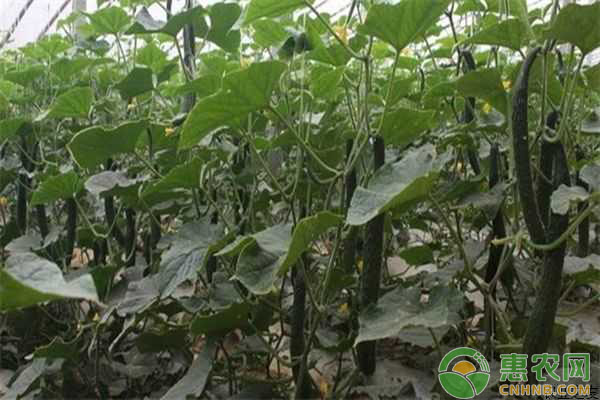
Symptom explanation:
Calcium deficiency is the root cause
There are two main causes of cucumber rotten growing tips: first, the typical symptom of calcium deficiency, which mainly occurs in the early stage of flowering and fruiting, when the plant grows to 0.5-2 m, manifested mainly as dry and withered tips of the heart leaves, basically no disease symptoms on the leaf stems and other parts, very common when it occurs in greenhouses, usually an outbreak on a large scale across the whole greenhouse. Second, it is caused by infectious diseases, mainly gummy stem blight, bacterial marginal blight, scab, etc. When such diseases occur, the leaf stems usually show typical disease symptoms of that disease, such as longitudinal splitting of the stem in gummy stem blight, and V-shaped large spots appearing on the leaves. The rotten growing tip condition caused by diseases usually occurs independently in the early stage, distributed in spots and patches, and gradually expands in the later stage. Farmers can determine the cause of the disease based on how rotten growing tips occur in the greenhouse, and apply targeted pesticides for control.
Come to think of it, many diseases can also cause rotten growing tips, so why is calcium deficiency said to be the root cause here? Here we need to start from the manifestations of calcium deficiency. The typical symptoms of calcium deficiency, such as blossom-end rot, all appear only when calcium deficiency is already very severe, just as in humans the symptoms of late-stage lung cancer are relatively obvious; although no obvious symptoms have yet appeared in the early stage, the harm caused by the deficiency still exists. The water-soaked dark spots on the underside of leaves during consecutive cloudy days at emergence mentioned earlier are one manifestation of calcium deficiency; it is just that the damage is not great and it can still recover. Generally speaking, the new buds around the growing point are like a newborn baby, with strong disease resistance, low probability of pathogen infection, and fewer disease occurrences. However, when the calcium deficiency of the plant has not yet reached a severe level and has not yet shown the typical symptoms of calcium deficiency, calcium deficiency will still affect the normal growth and development of the plant, causing low cell division activity in parts prone to calcium deficiency such as heart leaves, fruit tips, and root tips, and affecting the functions of the plasma membrane and cell wall, resulting in poor adaptability to extreme conditions such as high temperature, low temperature, and dim light, and reduced stress resistance and disease resistance, making it very easy to be infected by pathogens. It can be said that the reason the new buds around the growing point are infected by pathogens is very likely that the plant is calcium deficient and the new buds have poor disease resistance.
Recommended plan:
Calcium supplementation and disease prevention
1. Calcium fertilizer is hard to supplement; choosing the right method is very important
Everyone says rotten growing tips are due to calcium deficiency, but I sprayed calcium fertilizer several times, so why did it not work? This is the doubt of many farmers. To understand this point, you must first understand the characteristics of calcium fertilizer. Calcium is the "laziest" of all trace elements, difficult to absorb, and very easily fixed both before and after absorption, with poor activity.
When applying calcium fertilizer by drenching, farmers mostly choose ionic calcium fertilizers, such as calcium nitrate. After ionic calcium fertilizer is applied, it is usually fixed by *soil colloids in about 2 hours, and cannot be transported like other elements, making it difficult for roots to absorb. Solution: choose chelated high-activity calcium fertilizer. Shiyuan Jinniu floating calcium is recommended; it is not easily fixed, has high activity, and gives better results.
When spraying calcium fertilizer on leaves, what absorbs the calcium fertilizer is mainly the mature leaves that have already grown. One of the characteristics of calcium fertilizer is poor activity; the calcium fertilizer that enters a leaf is confined within that leaf and cannot migrate out to be reused. The calcium fertilizer absorbed by the leaves can hardly reach the growing point that is truly calcium deficient, making the effect of leaf calcium supplementation relatively weak. Solution: change spraying habits, focusing on spraying new buds, growing points, fruits and other parts; adding modifiers such as Anrongle can increase the activity of calcium fertilizer within the plant, allowing the calcium fertilizer in yellow leaves to be transported out and reused.
2. Disease prevention
After rotten growing tips occur, they are very easily infected by pathogens, so disease prevention must be strengthened. Farmers should apply pesticides according to the symptoms for better guaranteed results. If they cannot identify the disease, here is a general formula recommended for everyone, which can comprehensively prevent gummy stem blight, bacterial marginal blight, scab, etc.
Recommended formula: Fushuaide 1500 times, thiazole zinc 400 times, Shiyuan Jinniu floating calcium 1000 times, seaweed acid 700 times.
Fushuaide has a broad fungicidal spectrum and good control effects on phytophthora blight, gummy stem blight, scab, gray mold, etc. Thiazole zinc has special effects on bacterial diseases and can also prevent many fungal diseases. Combined, the two have a broad spectrum and high efficiency, and can prevent most pathogens that infect growing points. Calcium fertilizer and seaweed acid can improve crop stress resistance, promote the growth of heart leaves, reduce pesticide damage, and assist fungicides to achieve better control effects.