Key Techniques for Cultivating Shaggy Mane Mushrooms in Woodlands in Summer
Under natural conditions, shaggy mane mushrooms are produced only in the two seasons of autumn and spring. However, if one flexibly grasps their characteristics and meets the conditions required for their growth and development, they can still be produced in summer.
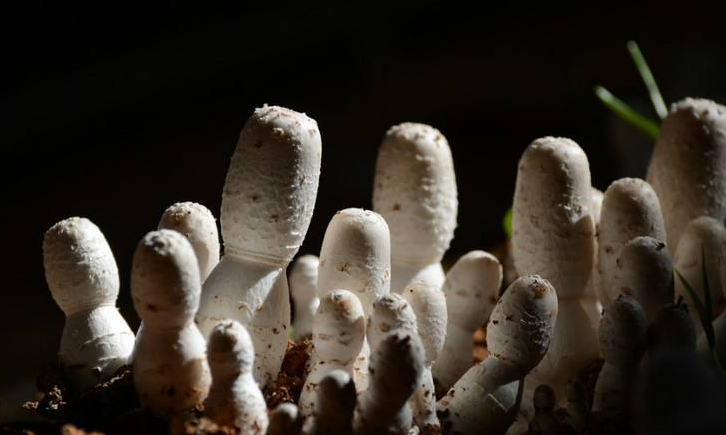
1. Building mushroom beds. This technique is suitable for industrialized production in high-yield forests. Dig mushroom beds 0.2 m deep, 1.4 m wide and up to 20 m long, with a spacing of more than 0.8 m between beds, and leave a 4-6 m wide working path every few beds to facilitate vehicle access.
2. Erecting a shade canopy. Build a shade canopy (using straw and shade netting, etc.) 2.5-3 m from the edge of the bed to block light and rain. The edge of the shade canopy should extend 2 m beyond the edge of the bed, so that the sun from 9:00 to 16:00 cannot shine on the mushroom bed. In spring, plant long-vined vegetables or flowers around the canopy, such as bottle gourd, chayote, cucumber, winter melon, etc.
3. Installing humidification equipment. Set up water spray nozzles on the upper part around the shade canopy, with pipes and single-side spray nozzles, and install a row of double-nozzle pipes every 4-5 m inside the shade canopy, so as to sprinkle water and increase humidity in the space inside the shade canopy. The pipes around the perimeter should each be fitted with a valve on each side, so that when there is wind the nozzles at the low positions can be shut off.
4. Pest prevention measures. The surroundings of the shade canopy are best sealed off with shade netting to prevent pests from entering.
5. Covering * material. Use fertile vegetable garden * or the fertile * of greenhouse vegetable soil. To every 1000 KG of *, add 200 KG each of fermented sheep manure and pig manure (or special fertilizer for edible fungi) and 10 kg of urea, mix thoroughly, spray with chemical insecticide, then cover with film; after 5-7 days open the * pile, add 30 KG of quicklime, mix thoroughly again and cover with film, and it can be used after 7 days. Use 2 cubic meters of covering * per 100 sq m of mushroom bed.
6. Cultivation management methods. The fermentation treatment, bag sealing and spawn running of the culture material are carried out according to basic methods. Appropriately extend the spawn-running time, generally by about 20 days, then carry out bag removal, placing into beds and covering with * according to basic methods.
7. Points to note. The air humidity under the shade canopy should not be too high; the maximum at the central position is 95%, and around the edges it is about 75%. Watering to retain moisture must be done several times in small amounts, and as far as possible do not let water droplets accumulate on the fruiting bodies. The thickness of the covering * should preferably be 2-3 cm, but if large mushrooms are to be produced, it can be covered to 4-3 cm.