Pollution-free high-yield cultivation and management techniques for taro
Taro is relatively high in nutritional content and is grown over a fairly wide range. It is also known as taro, hairy taro, winter taro, and so on. These substances can not only boost the body's immune capacity but also help prevent certain diseases. Taro originated in Indonesia and later began to be grown on a large scale in China. It can be used not only as a vegetable but also as a grain. Therefore, carrying out pollution-free, high-yield cultivation and management methods for taro is very important.
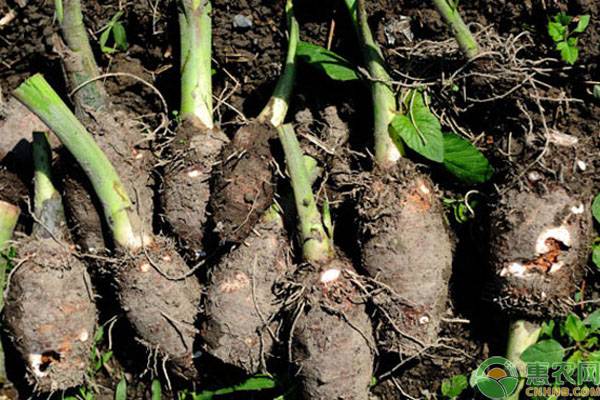
In order to ensure the yield and quality of taro cultivation while maintaining pollution-free growing, strict control must be exercised throughout the management process, the key steps within it must be handled as well as possible, and the yield of taro must be increased to the greatest extent.
1. Selection of planting* land
Taro is a perennial woody plant. This plant has relatively high requirements for *soil and prefers to grow in loose, fertile and well-aerated *soil. Therefore, in order to maintain pollution-free cultivation and increase yield, attention must be paid to *soil layer thickness, looseness and air permeability when selecting *soil. Neutral and acidic *soil are more suitable for its growth. When selecting *soil, accumulation in areas with waste gas, waste, sewage and the like should also be avoided as much as possible, with the aim of reducing pollution to taro.
2. Plowing and fertilizing
In the process of taro cultivation, plowing is a relatively key stage. Before taro planting, the *land must be leveled. The plowing depth is about 30 cm, and its purpose is to ensure that taro has a relatively good *soil growth environment [2]. In addition, during deep plowing, some fully composted organic fertilizer can be added as appropriate. During planting, furrow fertilizer and applied fertilizer should be added. In some areas, after planting, furrow fertilizer can also be added as appropriate to maintain good results.
3. Seed selection and planting
Seed selection is an important step and a necessary condition for increasing taro yield and quality, and some issues must be noted during seed selection. When selecting white taro seeds, attention must be paid to the fact that the seed diameter should be uniform, and there should be no disease, insect damage or rot. After seed selection is completed, continuous cropping must be prohibited in planting, attention must be paid to rotating with other crops, and during planting, attention must be paid to planting spacing. After planting, appropriate irrigation must also be carried out.
4. Weeding and film mulching
After taro planting is completed, some weeds will certainly appear in the *soil, so the weeds must be properly handled. Chemical fertilizer can be used for spraying, but the dosage must be controlled well to prevent harm to taro growth. After weeding, film mulching must also be carried out. In order to provide a suitable environment and temperature for taro growth, the surroundings of the agricultural film should be tamped down to prevent the wind from blowing the agricultural film and affecting the temperature.
5. Breaking the film to draw out seedlings, checking seedlings and replanting
At 10-15 d after taro planting, taro will develop a bud sheath, and at this point taro must be treated to draw out the seedlings. If the seedling emergence rate can reach 80%, replanting must be carried out promptly. This stage is important for increasing taro yield.
6. Later-stage cultivation techniques
Cultivation techniques are very important for pollution-free taro cultivation. After planting and drawing out seedlings, cultivation techniques must be carried out. The effects of cultivation techniques mainly include the following aspects.
First, fertilizing is a key stage and must be ensured. Taro has relatively high fertilizer requirements. During the growing period, nitrogen, phosphorus and potassium fertilizers must be applied, and topdressing should also be carried out promptly, because only when fertilizer is ensured can yield increases be maintained and starch accumulation also be ensured.
Second, scientific watering must be carried out. This stage is effective for many plants, and it also has relatively strict requirements for taro. Taro relatively prefers a moist environment and dislikes drought. Once drought occurs in its growing environment, it will directly cause taro leaves to turn yellow, and relatively serious diseases and insect pests may also appear; if its growing environment is relatively waterlogged, it will also affect the normal growth and development of taro roots and stems. Therefore, at the seedling stage, the planting *soil should be kept dry-wet alternating to ensure healthy growth of taro underground stems. When taro enters the tillering stage, the irrigation frequency must be ensured, that is, irrigate once every 5 d, with the aim of ensuring *soil moisture. If the rainy season arrives, corresponding drainage measures must be taken promptly.
Third, carry out hilling* operations. This stage is also very important for taro growth. Under normal circumstances, growing taro should be hilled about 4 times. Fourth, in the prevention of diseases and insect pests, during taro cultivation, in order to increase yield and maintain pollution-free management, the demand for chemical fertilizer should be reduced, but certain measures must be taken to prevent diseases and insect pests. During this period, the methods that can be used are physical prevention and pest control. If chemical fertilizer must be used, use fertilizer test reagents with relatively low efficacy as much as possible.
Carrying out pollution-free cultivation and management methods for taro has a certain degree of complexity. It requires not only excellent planting techniques but also technical management, especially management of key stages. Only when all aspects are done promptly can the expected high yield be obtained while maintaining pollution-free status and economic benefits.