How to grow chickpeas for high yield? Detailed planting techniques
Chickpeas are named for their unique shape, which closely resembles an eagle's beak. They contain high-quality protein, high unsaturated fat, high methylcellulose, high calcium, high zinc, high potassium, high vitamin B2 and other nutrients beneficial to health, and are known as the “king of beans”. At present, the price of chickpeas on the market is around 8 yuan/jin, and demand is high. They can be made into all kinds of snacks, canned goods, fried beans, granule products, instant drinks and other foods, with relatively high yields. So how are chickpeas grown?
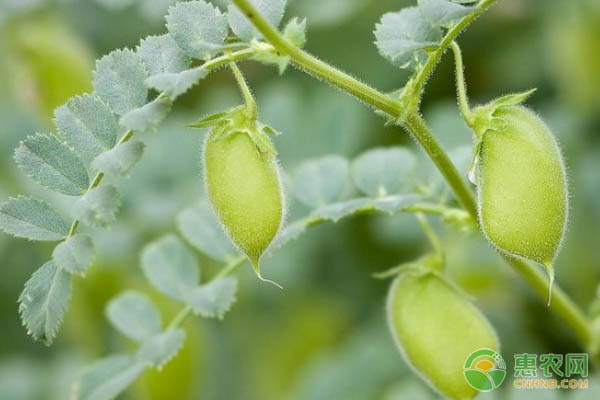
1. Preparation before planting
Site selection, plowing, and base fertilizer application. For planting chickpeas, choose plots with above-medium organic matter, neutral or slightly alkaline sandy loam, and convenient irrigation, and practice a rotation of more than three years with crops such as spring wheat, corn, and vegetables. Do not plant chickpeas continuously or in saline-alkali land.
2. Sowing time
Sow at the right time, which should be after the last spring frost in the local area. In the Zhongguancun Hegu eastern area of Tekes County, mid-to-late April, and in the central and western areas, early April is the best time to sow chickpeas.
3. Sowing method and sowing rate
Use 45 cm equal-row spacing drilling, with plant spacing of 10 cm to 15 cm and sowing depth of 3 cm to 6 cm. The sowing rate per mu is 4 kg to 5 kg for the “A-1” variety and 3 kg to 4 kg for the “88-1” variety, with 8 kg to 10 kg of diammonium fertilizer applied with sowing, and a seedling stand of 4,500 to 5,500 plants.
4. Irrigation
Irrigated land should be watered once each at the early flowering stage, pod-setting stage, and grain-filling stage. Note that watering in the later stage should not be excessive, so as not to affect normal ripening.
5. Fertilization
At the early flowering stage, in combination with cultivating the soil, apply 5 kg to 8 kg of urea per mu as a side dressing. At the flowering stage, apply a foliar fertilizer once. Per mu, spray 1 tube of Penbaobao plus 50 g to 100 g of potassium dihydrogen phosphate, plus 50 g of urea, plus 15 kg of water for foliar spraying.
The above are the high-yield planting techniques for chickpeas. Chickpeas have a well-developed root system, and the main root can reach a depth of 2 m in the soil. They are very drought-tolerant, and coastal areas are not very suitable for planting them. Chickpeas are of great significance to the development of Northwest China, North China and many other arid and semi-arid regions of our country. They are widely planted in North China. Farmers who grow chickpeas can master the above planting techniques to achieve the goal of high yield.