Fertilization Methods and Water-Fertilizer Management Techniques for Green Sichuan Pepper
Green Sichuan pepper is drought-tolerant, afraid of waterlogging, and fond of heat and calcium. Its root system is fleshy and spreads vertically shallow while spreading horizontally over a wide area, so it has high requirements for *soil, requiring breathable, well-drained *soil rich in organic matter. Today the editor will talk about water-fertilizer management techniques for green Sichuan pepper.
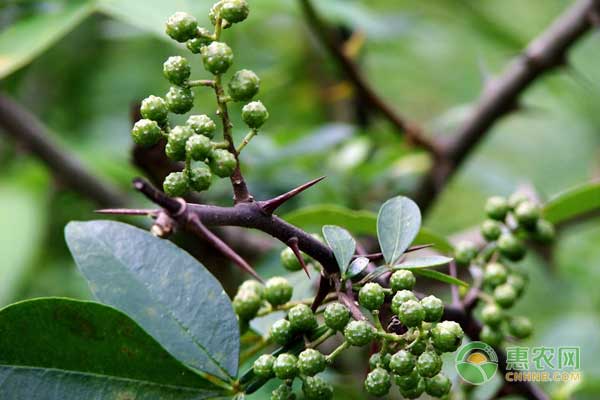
Water-Fertilizer Management Methods
Throughout the entire growth and development process of green Sichuan pepper, including bud break, shoot flushing, flowering, and fruiting, it must continuously absorb water and large amounts of nutrients. Green Sichuan pepper has low water requirements; excessive water will cause waterlogging in the root system, insufficient oxygen supply, and massive death, which in turn causes the death of the green Sichuan pepper plant. Irrigation should be decided based on rainfall conditions and *soil moisture to determine the amount of irrigation water. Fertilization is a very critical measure in the information-based management of green Sichuan pepper. Mastering the correct fertilization methods and fertilization timing is a key measure to maintain high yield, stable yield, and high quality in green Sichuan pepper. During the fertilization process of green Sichuan pepper, one should "adapt to the times, adapt to the tree, and adapt to the site", and emphasize the principles of "balanced fertilization, formula fertilization, and fertilization by observing the tree", to reduce production costs and obtain greater economic benefits.
New Shoot Bud Break Stage
From June to July, along with the harvesting of Sichuan pepper, most branches have already been pruned, the root system is small, the absorption capacity for fertilizer and water is relatively poor, and resistance to the geographical environment is low. The trunk must provide large amounts of nutrients to assist root growth, new shoot bud break, and the growth of newly developed branches. It is recommended to fertilize with high-nitrogen macro-element fertilizer + medium-element fertilizer, choosing before or after rainfall to apply a certain amount of macro-element water-soluble fertilizer, while combining large amounts of organic fertilizer and bacterial fertilizer, which can effectively improve fertilizer utilization and water retention and air permeability. Note that this fertilization should be carried out according to climate conditions; if hot weather occurs, it is recommended to fertilize about 10 days before harvesting the Sichuan pepper.
Branch Aging Stage and Flower Bud Differentiation Stage
From mid-November to September, the branches of Sichuan pepper gradually age and form flower buds. Flower bud formation is mainly related to phosphorus, but an appropriate amount of potassium can reduce nitrogen absorption and promote branch aging and flower bud differentiation. Therefore, at this time, the application of an appropriate amount of nitrogen, a large amount of phosphorus, and potassium fertilizer has a very good effect on promoting branch aging and promoting flower bud formation and differentiation growth. At this time, root growth and absorption capacity are both good. It is recommended to use high-nitrogen macro-element fertilizer + medium-element fertilizer, choosing before or after rainfall to apply a certain amount of macro-element water-soluble fertilizer.
Physiological Leaf Drop Stage
From October to November, after the temperature decreases, the condition of green Sichuan pepper will promote the dropping of yellow leaves and enter dormancy. However, when the *soil temperature is above 5°C, the root system still has a certain absorption capacity. At this time, a certain amount of nutrient supplementation can increase the nutrient storage of the trunk, promote branch and flower bud growth next year, and improve winter drought resistance. Also, because the buds enter dormancy, a certain amount of fertilization will not cause the buds to sprout in winter and cause yield reduction. It is recommended to choose before or after rainfall to apply a certain amount of compound fertilizer as a base application, while simultaneously applying large amounts of organic fertilizer and *soil conditioner.
Bud Break
From March to mid-April, the buds begin to sprout. The buds have a large demand for carbon and nitrogen nutrients, appropriately require phosphorus and other medium elements, and mainly absorb the nutrients stored in the trunk from the previous year. The root system has a certain nutrient absorption capacity. It is recommended to fertilize with amino acid chelated medium-element fertilizer, choosing before or after rainfall to apply a small amount of macro-element compound fertilizer.
Fruit Enlargement Stage
From early April to mid-April, the root system of the green Sichuan pepper tree has strong vitality and good absorption capacity. Fruit growth enters the nutrient accumulation process, with a very large demand for carbon, phosphorus, potassium, and calcium, and it also requires rapid supplementation of medium elements. A relatively large amount of elements must be supplemented artificially to promote nutrient accumulation in the fruit and nutrient accumulation in the trunk. It is recommended to fertilize with macro-element water-soluble fertilizer + medium-element fertilizer, choosing before or after rainfall to apply a certain amount of macro-element compound fertilizer as a base application.
Fertilization Methods
When fertilizing, apply in holes or furrows at the canopy projection (water seepage) area. Do not pile fertilizer at the base of the trunk; this is not only unfavorable for fertilizer absorption but also easily causes excessively high concentration within a small range of fertilizer, resulting in root burn and seedling scorch. For pepper orchards that are closed-canopy or sparsely planted, shallow application can be done between rows and between plants, preferably without damaging or minimally damaging large roots. Based on the growth and development status of green Sichuan pepper, as well as differences in *soil organic matter and *soil fertility retention, the specific fertilization amount varies greatly. The standard for fertilization should be targeted fertilization based on whether the fertilization standard is met, reducing property losses caused by inaccurate fertilization.
*Soil Improvement
1. Proper *soil turning and *soil maturation; deep loosening and *soil improvement is a key measure in *soil management. From November to October, carry out deep loosening together with base fertilizer. If the *soil is loose, thick sandy *soil, then deep loosening is not necessary.
2. Mulching with grass: Use straw, weeds, etc. to cover the orchard. Grass mulching can increase the organic matter content of the *soil, reduce surface runoff and *soil annual rainfall, and conserve *soil moisture; grass mulching can reduce ground temperature changes, which is beneficial to root growth; grass mulching can also have the effect of no-till weed suppression. However, the depth of grass mulching must not be too high; if too high, it seriously affects the photosynthesis of green Sichuan pepper, and excessive grass will compete with the green Sichuan pepper root system for nutrients, affecting the growth of green Sichuan pepper.
3. Additional application of bio-organic fertilizer and bacterial fertilizer: Use bio-organic fertilizer and bacterial fertilizer to promote the formation of *soil colloids and reduce the reproduction of harmful organisms. Additional application of organic fertilizer and bacterial fertilizer can promote *soil looseness, maintain water and fertilizer, improve fertilizer utilization, reduce fertilizer damage, reduce pesticide damage, and reduce the occurrence of root rot.
Because the fruit type of green Sichuan pepper, climate conditions across the country, growth environment, and cultivation management methods differ, the above introduction is for reference only. When fertilizing on a large scale, please first conduct a small-area experiment and adjust the fertilization plan according to the actual local climate conditions. The above are the key points of water-fertilizer management methods for green Sichuan pepper, and we hope they are helpful for your management of green Sichuan pepper.