Analysis of Spring Corn Sowing Time and Causes of Poor Emergence Rate
Spring is a season for sowing, and farmer friends need to start getting busy at this time. Many crops are sown at this time, and corn is the same, it must be sown at a suitable time, so when is the best time? What causes poor emergence rate in corn? Let the editor tell everyone below!
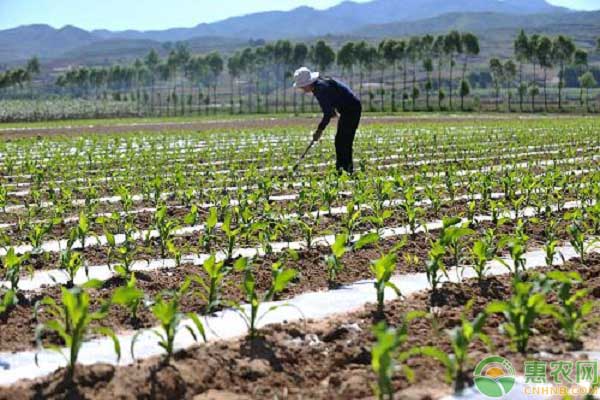
1. When should corn be sown in spring? Corn in spring in southern China is generally planted from mid-to-late March to April each year. Planting corn is a matter that requires much attention. If spring corn is planted too early, because the outdoor temperature is too low, it will affect the early emergence rate of corn to a certain extent. If spring corn is planted too late, planted in mid-to-late April or mid-to-late April, then the corn after harvest will affect the growth of corn in the next season. Here in southern China, corn is planted in two seasons each year, early corn and late corn. Early corn, as mentioned above, is planted from mid-to-late March to April, and late corn is generally planted from early-to-mid July to mid-to-late July.
2. What causes a poor corn emergence rate? 1. Drought. Drought is a very key factor affecting the emergence rate of corn planting. Because of the lack of moisture, many nutrients inside the young corn kernels cannot dissolve normally, and the lack of sufficient nutrient supply is also important in affecting the early emergence rate of corn kernels. 2. The quality of the corn seed itself is substandard, for example, using expired corn seed, or the corn seed has already rotted before being planted. 3. Pecking by turtledoves and * chickens. Pecking by turtledoves and * chickens? Many friends may not understand this reason very well, but I think friends who live in rural areas will not be unfamiliar with it. Having lived in rural areas for decades, every spring when the family plants corn, the editor has to deal with turtledoves and * chickens. Turtledoves generally come out during the day to peck at the corn in the field, and * chickens generally come out at dusk and in the morning to peck at the corn in the field. Because the corn is not planted very deep when the seeds are sown, they can very easily use their claws to turn the corn kernels out of the * soil.
3. What should be done about a poor corn emergence rate? 1. The area we most need to pay attention to for a poor planting emergence rate in the corn field is the problem of moisture supply. Insufficient watering and overly dry * soil are not conducive to the sprouting of corn kernels, while too much watering and overly wet * soil, and thus an insufficient oxygen content in the * soil, are also not conducive to the sprouting of corn kernels. 2. Next, the supply of liquid fertilizer is also a primary condition affecting the emergence rate of corn kernels. In the early stage of corn planting, before the corn kernels sprout, not much fertilizer is needed, about half a bucket of organic fertilizer diluted into two cans of water. Put the liquid fertilizer down first, then put down the corn seeds, and finally sprinkle a layer of evenly thick * fertilizer on top of the corn kernels.
From the above, we can understand that the best sowing time for spring corn is from mid-to-late March to April each year. Being earlier or later than this time range has certain effects. Generally speaking, the reasons for a poor corn emergence rate are the three above, and the editor has also shared some corresponding prevention methods with everyone, hoping it will be helpful to everyone.