When is the best time to transplant cotton? A detailed guide to timing and methods
Cotton is mostly grown using the seedling-raising and transplanting technique, which promotes strong seedlings and lays a solid foundation for a high yield, making it one of the more widely promoted cotton cultivation techniques today. So how should cotton be transplanted? What should you pay attention to? Let's find out together.
1. Transplanting time
Temperature and humidity at the time of cotton seedling transplanting are important factors affecting root development after transplanting and shortening the seedling recovery period. Generally, cotton seedling transplanting requires an air temperature above 15°C, a stable low temperature above 17°C in the 10 cm soil layer, and root-zone humidity no lower than 65%. If the air temperature stays below 15°C for consecutive days at transplanting, accompanied by overcast and rainy weather, and no new lateral roots grow after more than 5 days, the seedlings will shed leaves, the stems will turn red, and the seedling recovery period will be difficult. Therefore, the temperature at cotton transplanting must meet the requirements, and there should also be several days of good weather after transplanting, which helps the seedlings take root and resume normal growth.
2. Pay attention to seedling age
Generally speaking, the younger the cotton seedling, the shorter the recovery period, but if the seedling is too young, growth and development will be slow after recovery, failing to fully extend the cotton growth period. However, if the seedling is too old, with more true leaves and more roots, the roots are easily damaged during transplanting, making recovery difficult. Therefore, seedlings with 3-4 true leaves are generally preferred, at a seedling age of about 40-50 days, when the seedlings have strong stress resistance, are very easy to establish, have strong rooting ability, and a short recovery period. For seedling raising and transplanting in saline-alkali soil, to improve salt resistance of the seedlings, nutrient pot seedling raising can be used, and transplanting is done when the seedlings grow to 5-6 true leaves at a seedling age of about 50 days.
3. Transplanting methods
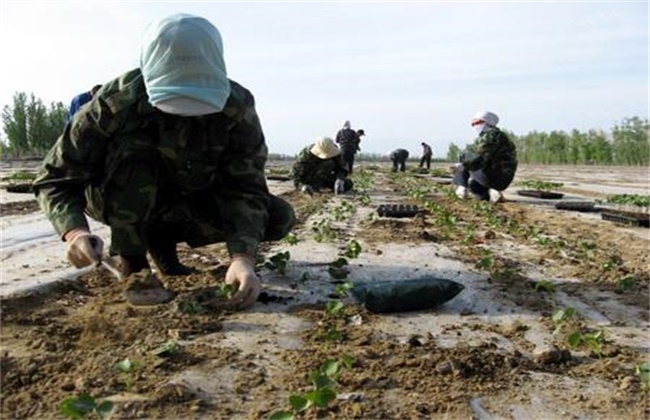
During transplanting, handle the seedlings gently and try not to damage the roots or damage them as little as possible. When transplanting in furrows, open the furrow and transplant immediately to avoid soil moisture loss. The furrow should be uniform in depth, and after planting the seedlings should sit about 2 cm below the ground surface. When covering with soil, cover two-thirds first, then water, and after the water has completely infiltrated, cover with the remaining soil. Be careful that the roots are not exposed on the ground surface and that they are firmly combined with the soil. Plastic film mulching can also be used during seedling transplanting to encourage early seedling development; cover the field with plastic film before and after transplanting. This has a clear effect of increasing temperature and preserving soil moisture, can greatly shorten the recovery period, and encourages cotton to grow vigorously and develop early.
The above is an introduction to cotton transplanting time and methods. We hope it helps you. For more related knowledge, please stay tuned to us.