Detailed Explanation of Key Techniques for Managing Grafted Cucumber Seedlings
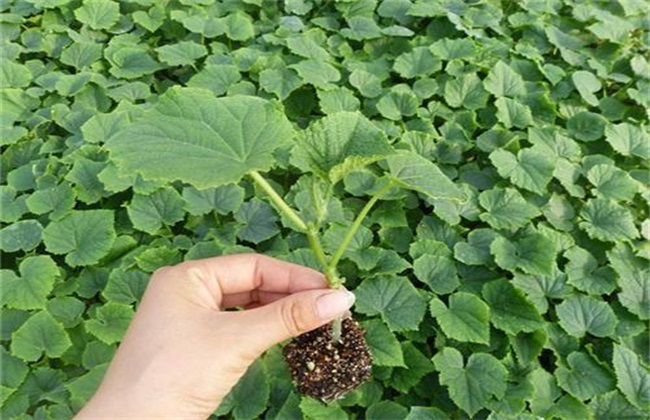
Cucumbers are cultivated all over China and are a type of gourd vegetable. Nowadays, in order to prevent and control soil-borne diseases, cucumbers are mostly grown using grafting-based seedling methods. The management of grafted cucumber seedlings is very important, so how should we manage them? Today, the editor brings you the key techniques for managing grafted cucumber seedlings. Let's take a look together below!
1. Pay attention to heat preservation
Temperature is crucial to the survival of grafted cucumber seedlings. Therefore, after grafting cucumbers, the first management task we need to do well is heat preservation. If the temperature is unsuitable, it will affect the healing of the grafted cucumber seedlings. If the temperature is too low, the graft union of the grafted seedlings will be difficult to heal under low-temperature conditions, leading to a decline in the survival rate. So after grafting, we should keep the temperature at around 25°C to promote healing of the graft union and improve the survival rate.
2. Pay attention to moisture retention
In addition to temperature, humidity is also very important to the growth of grafted cucumber seedlings. If the air humidity in the grafting seedbed is too low, the cucumber scions will wilt due to lack of water, causing the survival rate of the grafted seedlings to decline. Therefore, after grafting, we must pay attention to controlling humidity well. Within 4 days after grafting, the air humidity in the seedbed should be controlled at around 90%.
3. Pay attention to shading
Light also has a great relationship with the growth of grafted cucumber seedlings. If the grafted seedlings are raised and grown inside a greenhouse, then outside the greenhouse we should pay attention to covering it with some sparse straw curtains or shade nets, etc. This avoids direct sunlight on the grafted seedlings, which would cause water to evaporate too quickly and lead to wilting of the scions. It can also play a role in heat preservation at night, which is very beneficial to the growth of grafted cucumber seedlings.
4. Pay attention to ventilation
Ventilation is also a key point in the management of grafted cucumber seedlings. If grafted cucumber seedlings grow in an environment with poor air circulation and poor ventilation, then the poor air quality will affect the growth of the grafted cucumber seedlings. Therefore, about 4 days after grafting, when the grafted seedlings have survived and begun to grow, we can begin ventilation. At the beginning, the ventilation openings should not be too large; they should be gradually enlarged to give the grafted seedlings a process of adaptation.
5. Root pruning of the scion
Finally, for grafted cucumber seedlings, we also need to do a good job of root pruning the scion. Because if the scion roots are not cut in time, the scion roots may keep growing, causing the grafted seedlings to lose their value. Therefore, for cucumber seedlings raised by grafting, about 10 days after the grafted seedlings are transplanted and planted, the scion roots should be cut in time to avoid excessive rooting of the scion, which would affect the growth of the grafted seedlings.
The above is a brief introduction to the key techniques for managing grafted cucumber seedlings. That is all for today's introduction. This article is for reference only, and we hope it can help everyone!