Key Field Management Techniques for Spring Open-Field Radishes
In spring, as temperatures rise, vegetables can be sown in the open field without any protective facilities. Spring radish is a type of radish sown in spring and harvested in early summer, and it is a vegetable that helps fill the off-season gap in early summer vegetable supply. Its growing period is relatively short, so how should field management be carried out? Follow the editor to learn about it.
1. Thinning and Final Thinning
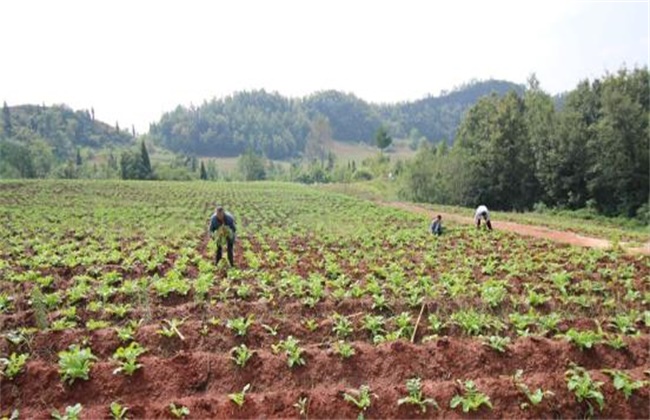
After radish seedlings emerge, they should be thinned in time to prevent leggy growth. For thinning and final thinning, the principles are to thin early and evenly, thin frequently, and set the final spacing late, selecting and keeping strong seedlings and removing poor, weak, diseased, and off-type seedlings. During the seedling stage, thinning is generally done 2-3 times. The first time is when the cotyledons unfold and the first true leaf appears, and it is only necessary to separate the seedlings; the second time is at 2-3 true leaves, keeping 2-3 plants per hole for dibbling, or spacing plants 10-12 cm apart for drilling. Final thinning should be done promptly at 5-6 true leaves. Generally, for large varieties the plant spacing is controlled at 25-30 cm, and for medium varieties at 25-25 cm.
2. Cultivation and Weeding
Radishes need loose, well-aerated soil for growth, so cultivation should be done in time. Especially during the seedling stage of spring radishes, more cultivation and soil loosening are needed. Generally, from the seedling stage until the rows close, 2-3 cultivations are needed, and the cultivation depth should be determined according to the plant's growth and development. The first cultivation should be shallow, the first should be deepened, but the roots must not be touched. Before the third cultivation, when the rows are about to close, earth up in combination with cultivation.
3. Watering
During the seedling stage of spring radishes, watering should be as little as possible or delayed. For summer radishes and autumn radishes, after sowing, if the soil is dry, water once in time to ensure the seeds have enough moisture for germination. Before the root system develops during the seedling stage, water absorption is low, so the principle of frequent light watering should be adopted to lower soil temperature and prevent viral disease. Spring and summer have more rain, which can easily cause waterlogging and root rot, so attention should be paid to drainage and waterlogging prevention.
4. Topdressing
According to the pattern of nutrient requirements of radishes during the growing period, the amount of topdressing should follow the principle of “light, heavy, light.” When sufficient base fertilizer has been applied, the first topdressing can be done before final thinning, when the seedlings have grown two true leaves. Generally, apply 10-15 kg of compound fertilizer per mu or 50-100 kg of decomposed cake fertilizer, applied in furrows on both sides of the plants, and cover with soil after fertilizing. Apply topdressing once each at the shoulder-exposed stage and the fleshy root expansion stage, each time applying 15-20 kg of urea and 10 kg of potassium dihydrogen phosphate per mu, and water once after each fertilization to promote fertilizer decomposition.
The above is an introduction to the field management of spring open-field radishes. We hope it helps you. To learn more related knowledge, please stay tuned to us.