Why Do Chives Have Rotten Leaves? Causes and Control Methods Explained
In winter and spring, whether you are a chive grower or a consumer buying them, rotten leaves on chives are a situation greatly feared. For growers, once chives develop rotten leaves, the result ranges from reduced yield in mild cases to total crop failure in severe cases. So what causes rotten leaves in chives? Let's find out together.
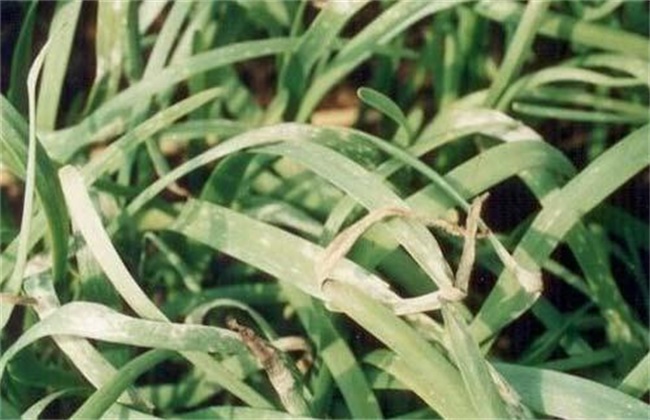
I. Causes of Rotten Leaves in Chives
1. Gray mold
There are mainly three types of symptoms: the white-spot type, the dry-tip type, and the wet-rot type. The white-spot type and the dry-tip type often occur together, with oval to spindle-shaped small white spots on the leaf surface or leaf margins, developing downward from the night, and in the middle to late stages the leaves simply shrivel and dry. The wet-rot type occurs under high temperatures: white spots appear on the leaves, the leaves initially show a water-soaked appearance, and soon a gray mold layer forms, causing the leaves to rot.
2. Phytophthora blight
It mainly infects the middle and lower parts of the leaves. After the leaves are infected, dark green water-soaked lesions appear first, the diseased part constricts, and the leaves turn yellow and wilt. In humid weather the lesions become soft and rotten, with a white frost-like layer. When the leaf sheaths are infected, brown water-soaked lesions appear, with soft rot and leaf detachment. When the bulbs and roots are infected, soft rot occurs, affecting the absorption and accumulation of nutrients.
3. Cottony leak
The leaves initially show dark green water-soaked lesions. When the lesions spread to half of the leaf, the leaf turns yellow, wilts, and droops. Under high humidity, milky cotton-like mycelium grows.
4. Yellow leaf disease
The lesions spread from the leaf tip and leaf margin toward the midrib, causing the leaf to turn yellow longitudinally. They are initially light yellowish-brown and later become deep yellow. It mainly harms the outer leaves of chives.
5. Soft rot
This is a bacterial disease that mainly harms stems and leaves, producing grayish-white semi-transparent areas. The lesions gradually soften and rot, exuding slime with a foul odor. In severe cases, plants topple and die in patches.
II. Control Methods
First, choose varieties with strong disease resistance. After planting, clean up the field, removing all diseased and dead plant material completely, and bury it deep or burn it to reduce the pathogen population. Before sowing, fumigation or dust control can be used. You can also use 250 g of 3% thiabendazole smoke agent per mu, light it and close the greenhouse for a night of fumigation. Alternatively, 1 kg of 6.5% carbendazim and iprodione dust per mu can be sprayed, once every 7 days. Before the disease breaks out, spray triadimefon once every 7-10 days. After the disease is detected, spray control agents such as carbendazim and iprodione, once a week for 2-3 consecutive times.
The above is an introduction to the causes of rotten leaves in chives and the control methods. We hope it helps you. For more related knowledge, please stay tuned to us.