Detailed Explanation of Key Management Techniques for Pumpkin in the Mid-to-Late Stage
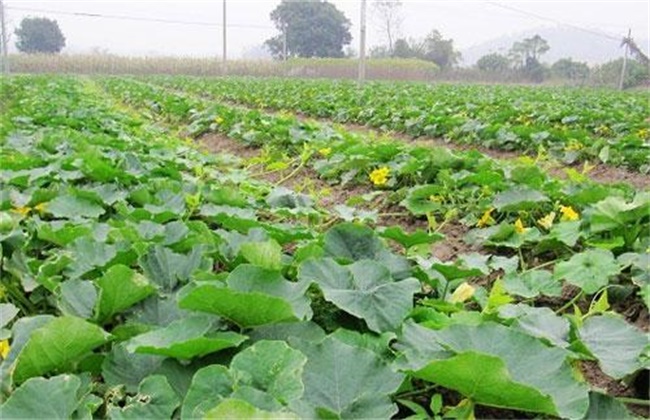
Mid-to-late stage management for pumpkin refers to the management stage from when the vines reach 35 cm in length until the pumpkin is mature and harvested. Management at this stage includes vine pressing, pruning, and so on, and is closely related to pumpkin yield. So how should pumpkin be managed in the mid-to-late stage? Follow along with the editor to learn more.
1. Topdressing for Pumpkin
Topdressing for pumpkin is mainly based on quick-acting nitrogen fertilizer, with a reasonable combination of nitrogen, phosphorus, and potassium. The topdressing amount is generally one-half or two-thirds of the total fertilizer application. Topdressing should be carried out in batches according to the different nitrogen, phosphorus, and potassium requirements at different growth stages of pumpkin. Topdressing at the seedling stage is mainly nitrogen fertilizer, with the purpose of promoting seedling growth. Generally, 5-8 kg of urea is applied per mu. During the fruiting stage, not only sufficient nitrogen fertilizer needs to be supplied, but phosphorus and potassium fertilizer also need to be supplemented in time to ensure full fruit expansion. Generally, after fruit set, 10-15 kg of urea and 5-10 kg of potassium sulfate are applied per mu, with a total of 1-2 topdressings. In the mid-to-late growth stage, the root system's ability to absorb nutrients weakens. To ensure the growth and development needs of pumpkin, foliar feeding can be used as a supplement. When spraying fertilizer, low concentrations of urea, potassium chloride, or monopotassium phosphate can be chosen, sprayed every 7-10 days, for 2-3 consecutive times.
2. Watering and Drainage
Pumpkin is a crop that is drought-tolerant and afraid of waterlogging. It requires dry air and a certain level of soil moisture. If air humidity is too high, diseases are extremely likely to occur, and if soil moisture becomes too high, it will affect root growth and absorption. In the middle and lower reaches of the Yangtze River, there is relatively more rain during the pumpkin growing period, especially during the plum rain season. Insufficient light can easily cause the spread of diseases, and after entering the summer drought, powdery mildew will occur, affecting the growth and development of pumpkin. Therefore, water management should focus mainly on drainage, with appropriate irrigation. During the flowering and fruit-setting stage and the fruit expansion stage of pumpkin, the plant has a relatively large demand for water, so appropriate irrigation should be carried out according to soil moisture and climate, and drainage should be carried out immediately after irrigation.
3. Plant Management
Plant management in the mid-to-late stage mainly consists of measures such as pruning and vine pressing, artificial supplementary pollination, and fruit management. The purpose is to adjust plant growth, promote fruit set, control the fruit-setting node position, and improve fruit marketability. Among these, vine pressing should be carried out in the afternoon, because operations in the morning can easily break and damage stems and leaves. Vine pressing has the effect of fixing leaves and vines, and can also produce adventitious roots that assist the main root in absorbing nutrients and water, meeting the plant's needs for flowering and fruiting. Through vine pressing, the vines can be spread out in the intended direction. For early-maturing varieties grown at high density, vine pressing can be done only once, or even not at all. There are also many pruning methods, mainly including single-vine pruning, double-vine pruning, and multi-vine pruning, with specific operations based on actual conditions.
The above is an introduction to mid-to-late stage management techniques for pumpkin. We hope it can help you. To learn more related knowledge, please stay tuned to us.