Detailed Explanation of Spring Open-Field Cultivation Techniques for Yardlong Beans
In spring, temperatures gradually rise, and at this time humidity and moisture are also relatively abundant, making it a great season for open-field vegetable cultivation, and yardlong beans are naturally no exception and can be grown in the open field. So how do you grow yardlong beans in the open field in spring? Follow the editor to learn more about it.
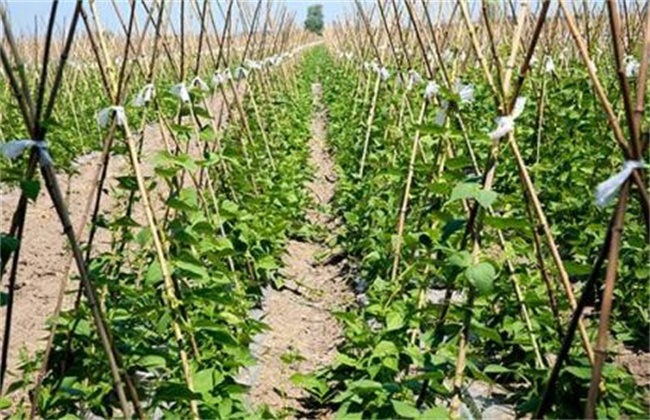
1. Cultivation Time
Spring open-field cultivation is the main cultivation method for yardlong beans, and this crop is the primary one in most parts of the country; this method has the largest planting area, the highest yield, a long harvest and supply period, and also the largest yield. In North China, sowing in the open field is generally done from the last frost period to mid-April; after emergence, the last frost period has passed, so the seedlings can grow safely, and tender pods can generally be harvested in mid-June, with harvesting usually continuing until mid-to-late August.
2. Sowing Preparation
For spring open-field cultivation of yardlong beans, winter fallow land or rice stubble land after harvesting overwintering leafy vegetables is mostly used, and after the previous crop is harvested, the field should be cleared in time and the land plowed to make the soil loose. 10-15 days before sowing, apply sufficient decomposed organic fertilizer as base fertilizer; the amount of fertilizer can be adapted to local conditions and determined according to soil conditions and fertility. Generally, 5000-6000 kg of organic fertilizer and 50-100 kg of compound fertilizer are applied per mu, followed by one shallow plowing; after mixing the soil and fertilizer, level the land and make beds. In areas with more rain, drainage channels should be built well so that water can be drained after rain.
3. Sowing Methods
For spring open-field planting of yardlong beans, if direct sowing is used, it can be done 5-7 days before the last frost period, when the temperature of the 10 cm soil layer at the surface is above 10 degrees, and it must be ensured that there is no frost damage after the seedlings emerge. At sowing time, if the soil moisture content is suitable and the soil moisture condition is good, watering is not needed and direct sowing in furrows can be done; if the soil is dry, furrows can be watered first, and if spot sowing is used, the furrows can be closed after sowing and watering. When raising seedlings and transplanting, seedlings can be planted in furrows first, then watered and covered with soil to close the furrows; planting density varies by variety.
4. Field Management
In early spring, temperatures are low. After sowing yardlong beans, emergence is often slow and uneven, and missing seedlings and broken rows often occur; when raising seedlings and transplanting, seedling death also often happens, so seedlings should be checked and replanted in time. During the seedling stage of yardlong beans, intertillage and weeding should be done more and seedlings should be hardened off to promote root growth. When soil moisture is sufficient, watering is generally not done during the seedling stage; after the seedlings emerge uniformly, water lightly in combination with timely intertillage and hoeing once. Topdressing should be mainly nitrogen fertilizer, applying about 10 kg of quick-acting nitrogen fertilizer per mu. If organic fertilizer is used, it can be spread between the rows or applied in shallow furrows; after spreading, shallowly hoe once, mix soil and fertilizer, then water to promote stem and vine growth.
The above is an introduction to spring open-field cultivation techniques for yardlong beans. We hope it helps you. To learn more related knowledge, please keep following us.