Detailed Explanation of Key Technical Points for Tomato Drip Fertigation
Tomato cultivation is basically distributed throughout all regions of our country. When growing tomatoes, water and fertilizer management is very important, as it is the key to meeting the nutrient and water needs of tomato growth. Nowadays, integrated water and fertilizer management is advocated, so watering during tomato cultivation is generally based on drip irrigation. So how should fertilizer be applied to tomatoes under drip irrigation? Today, the editor brings you tomato drip fertigation technology. Let's take a look below!
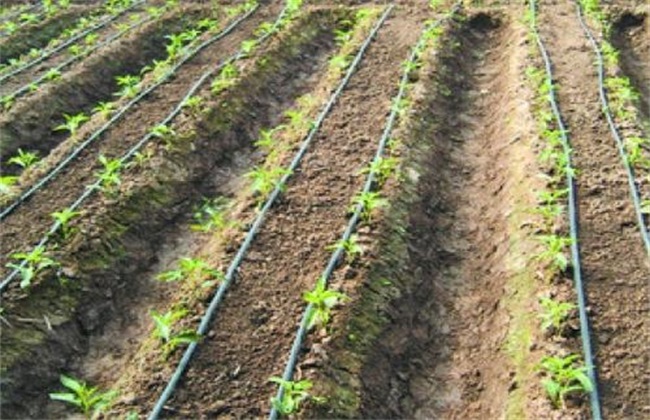
1. Drip fertigation equipment
Before drip fertigation, the first thing we need to prepare is the drip fertigation equipment. When growing tomatoes in a greenhouse, about two drip irrigation pipes should be laid between each ridge. The drippers should face upward, and the distance between drippers should be kept at about 30cm. Then, at the front end of the drip irrigation pipe, install a differential pressure fertilizer tank. Alternatively, a common Venturi fertilizer injector can also be used. After installation, attention should also be paid to equipping a mesh filter to avoid excessive impurities during fertilization, which could affect fertilizer efficiency.
2. Fertilization method
When carrying out drip fertigation, we should follow the principle of small amounts and frequent applications. Generally, after transplanting, water thoroughly once to promote the seedlings' rapid recovery. Then, when entering the seedling stage and flowering stage of tomatoes, irrigation should not be carried out; instead, drip irrigation should be applied appropriately about two times, and an appropriate amount of fertilizer should be added each time. Then, from the fruit expansion stage until the harvest stage, drip irrigate about once every week, adding about 5kg/mu of fertilizer. Finally, according to the specific growth condition of the tomatoes, apply fertilizer once with an irrigation interval. Drip fertigation work should be stopped half a month before vine pulling.
3. Fertilizer selection
When carrying out drip fertigation, the selection of fertilizer is very important. We should mainly use water-soluble drip irrigation fertilizer, ensuring that it will not react with other fertilizers to produce precipitates, avoiding corrosion of the drip irrigation system. Drip irrigation fertilizer can be homemade, or special-purpose fertilizer can also be purchased. If homemade, fertilizers such as urea, potassium nitrate and potassium chloride can be used for preparation. However, if conditions permit, it is best to use special-purpose fertilizer, because special-purpose fertilizer has high nutrient content and a sufficient and comprehensive ratio. It not only contains sufficient nitrogen, phosphorus, potassium and other fertilizers, but also has very many trace elements, which is very suitable for tomato growth.
4. Fertilization operation
Before fertilizing, first dissolve the fertilizer in water, stir it fully and then let it stand for a period of time. Then filter it, and after filtering, pour it directly into the fertilizer tank. Usually, fertilizer is added half an hour after the start of drip irrigation. If differential pressure fertilization is used, then the time is about 50 minutes. Avoid insufficient fertilizer or uneven drip irrigation. Then, after each fertilization, continue drip irrigating for about half an hour to flush the drip irrigation pipe. After finishing one season of planting, open the filter to discharge sewage and clean the filter screen. At the same time, after about 4 fertilizations, clean the drip irrigation pipe in time.
The above is a brief introduction to tomato drip fertigation technology. That is all for today's introduction. This article is for reference only, and I hope it can help everyone!