What are the four major taboos of mulching film in vegetable greenhouses?
Using greenhouses to grow vegetables is currently the main way to cultivate off-season vegetables, but several points must be paid attention to during the greenhouse mulching process, otherwise it may cause huge losses to vegetable production. Now let's take a look at the four major taboos of mulching film in vegetable greenhouses together with the editor.
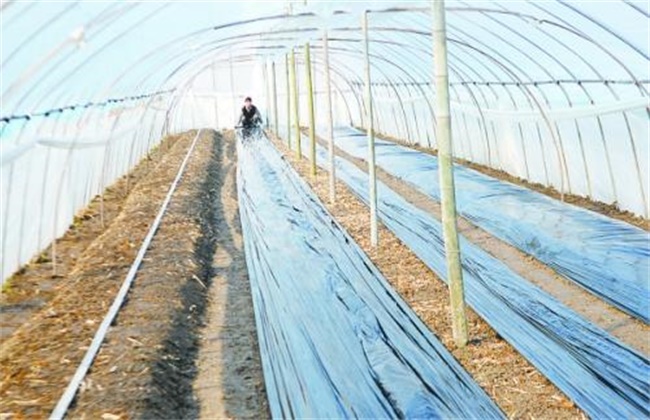
1. Do not choose industrial film
Greenhouse mulching film can generally be divided into industrial film and agricultural film. In vegetable production, agricultural film must be chosen, and industrial film must never be used, because industrial film contains certain toxic substances that are harmful to the growth and development of vegetables. Agricultural film can be further divided into transparent film, black film, and silver-gray film, etc. Different greenhouse films should be selected according to the season, vegetable variety, and mulching purpose. For example, transparent film should be chosen for the purpose of increasing temperature and preserving moisture, while black film should be chosen for cooling, weed control, and moisture preservation. Silver-gray film should be chosen to control aphids.
2. Do not neglect water management
Many people believe that plastic film mulching has a water-retaining effect and often neglect water management. In fact, water retention still requires water to work, so before mulching with plastic film, the soil must be kept sufficiently moist. This is the key to ensuring seed germination and normal growth of seedlings. Conversely, if the soil is sticky and heavy, with relatively more water and a lack of oxygen, this is extremely unfavorable for seed germination and root growth. Such plots should first be dried in the sun, and plastic film should be applied only after the soil moisture is suitable; otherwise, root rot and seedling death are very likely to occur.
3. Never sow too early
Sowing with plastic film mulching should not be done too early, because after mulching with plastic film, the low temperature conditions are relatively good, the soil moisture is good, and seedlings emerge quickly, but when late frost occurs, they are extremely susceptible to frost damage, causing seedling death. Therefore, the sowing time must take multiple aspects into consideration. First, the needs of seedlings for environmental conditions; second, the local frost period; third, the time from sowing to seedling emergence. Only when these three conditions are suitable should sowing be done before frost, with seedlings emerging after frost, which is conducive to increasing yield and income.
4. Do not fertilize blindly
Many farmers fertilize blindly in order to increase yield, especially by broadcasting or banding fertilizer at sowing time. This not only causes fertilizer waste and increases planting costs, but may even cause seedling burn and seed rot. Some farmers believe that high yield can be obtained after plastic film mulching, so they apply less fertilizer, resulting in later-stage fertilizer deficiency and premature aging, which seriously affects yield. When applying base fertilizer, full-layer fertilization must be used, and the soil must be deeply plowed 20-30 cm and fully mixed with the soil. Shallow application in the surface soil layer must be strictly prevented. The amount of fertilizer applied must be accurate, neither too much nor too little, and the organic fertilizer used must be fully decomposed.
The above is an introduction to the four major taboos of mulching film in vegetable greenhouses. We hope it can help you. If you want to learn more related knowledge, please keep following us.