What are the precautions for plastic film mulching in vegetable greenhouses?
Vegetable cultivation is very common in our country, and nowadays no matter what vegetables are grown, greenhouse cultivation is generally the main method. And when growing vegetables in greenhouses, plastic film mulching is indispensable. When covering vegetable greenhouses, there are many points that require our attention. So what exactly are they? Below, the editor brings you the precautions for plastic film mulching in vegetable greenhouses. Let's take a look!
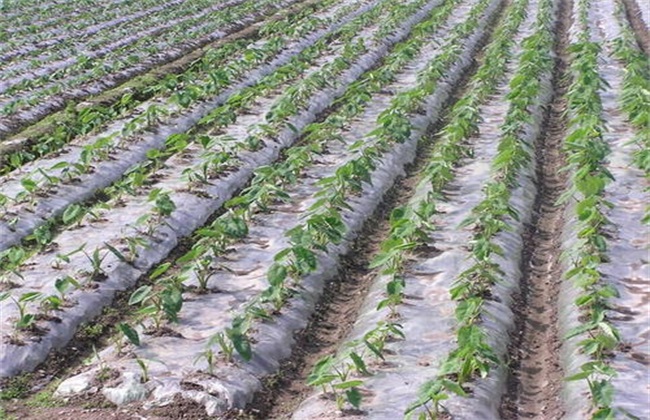
1. Pay attention to the choice of plastic film
The choice of plastic film is the first thing we need to pay attention to. Plastic film is generally divided into two types: industrial film and agricultural film. And when we grow vegetables, we must mainly use agricultural film, not industrial film. Because industrial film contains certain toxic substances, which will cause harm to crops, and in severe cases can cause total crop failure. And agricultural film is mainly transparent film, black film and silver-gray film. When choosing plastic film, we should choose reasonably according to seasonal changes and the crops being planted. If heat preservation and moisture retention are needed, then transparent film should be the main choice, and if cooling and weed control are needed, then black film should be the main choice.
2. Pay attention to water management
Many people, when covering with plastic film, feel that the film has a water-retaining effect, so after mulching they neglect water management. But the water-retaining effect of plastic film is premised on there being water in the soil. Therefore, before covering with plastic film, we should water sufficiently to increase the soil moisture content, ensure the emergence rate, and it is also the key to ensuring the healthy growth of vegetable seedlings. However, if the soil is too sticky and heavy, and excessive water content causes a reduction in oxygen content, then it is very unfavorable for the germination of vegetable seeds. Therefore, it should be dried, and plastic film should be covered only when the humidity is suitable, to avoid root rot and dead seedlings caused by excessive humidity.
3. Pay attention to sowing time
If plastic film is used when growing vegetables, because of its good heat preservation performance, good soil moisture and fast emergence speed, then if a late frost occurs, it is very easy to cause the seedlings to freeze, resulting in dead seedlings. Therefore, be sure to control the sowing time well. First, consider the environmental requirements of the seedlings. Then there is the frost period of the planting area, and finally the time from sowing to emergence of the planted variety. If the three conditions are suitable, then it is best to sow before the final frost period, ensuring emergence after the final frost period, which is very beneficial for the yield.
4. Pay attention to fertilization
Many people, in order to increase yield during the planting process, will fertilize blindly. Especially when sowing, they will apply fertilizer in furrows, which will not only lead to fertilizer waste, increase planting costs, but may also cause fertilizer damage and burn the seedlings. However, some people think that after covering with plastic film, the yield can be increased, so the amount of organic fertilizer and chemical fertilizer is greatly reduced, resulting in fertilizer deficiency in the later stage of the vegetables and reducing the yield. When we fertilize, no matter what kind of fertilizer it is, we should mainly use full-layer fertilization, turning it deep about 25 cm to ensure full mixing with the soil, and avoid shallow application on the surface soil. Finally, control the amount of fertilization well, and organic fertilizer must be fully decomposed.
The above is a brief introduction to the precautions for plastic film mulching in vegetable greenhouses. That's all for today's introduction. This article is for reference only, and I hope it can help everyone!