What causes dead seedlings in stevia? A detailed guide to prevention and control methods
Stevia (Stevia rebaudiana) is a perennial herbaceous plant whose leaves contain 6%-12% sugar, earning it the reputation as one of the world's three major sugar sources, and it is now grown all over the world. During the cutting propagation and seedling raising of stevia, dead seedlings occur frequently, caused by both physiological diseases and infectious diseases. Let's take a look together below.
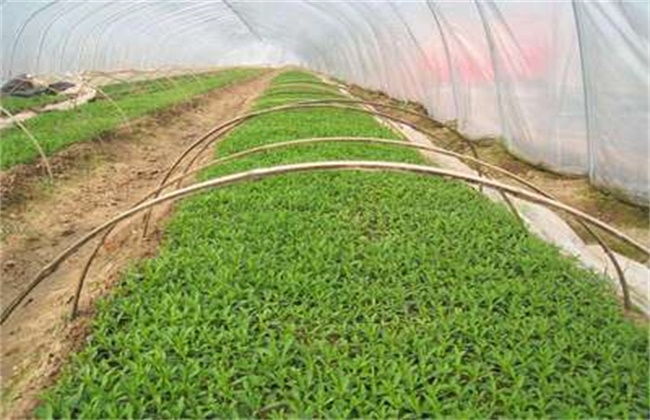
1. Physiological diseases
Physiological diseases are mainly related to the soil. For example, soil pH that is too high or too low, or improperly applied base fertilizer in the seedbed, may cause large-scale dead seedlings. This disease manifests as failure to take root, failure to sprout new buds, blackening of the stem, then blackening of the leaves, and death of the seedlings. In addition, herbicides with long residual activity from the previous crop to which stevia is sensitive can cause stevia to die of poisoning after cutting; the main symptoms are blackened leaves and blackened young stems. In addition, management after cutting is also very important. If temperature and humidity are high, large-scale dead seedlings can also result.
2. Infectious diseases
There are mainly three infectious diseases that cause dead seedlings in stevia. One is damping-off, a fungal disease that is the main disease in stevia seedling raising and occurs in ordinary seedbeds, though it occurs relatively rarely in open fields. The main symptom is water-soaked yellow lesions appearing at the base of the stem of the seedlings, which after enlargement constrict and lead to dry, dark brown death. The second is sclerotinia rot, also a fungal disease, which generally occurs on seedbeds from February to April; when it occurs, water-soaked irregular lesions appear at the base of individual seedlings and gradually spread upward and downward, eventually causing the plants to wilt and die in a dark brown state, and it spreads rapidly, sometimes killing hundreds or thousands of seedlings in an entire seedbed. The third is fusarium wilt, a systemic infectious disease in stevia production, mainly occurring on seedbeds used for raising seedlings in plots previously planted with cucurbit crops and cotton; it is easily triggered on cloudy and rainy days and is most severe when long periods of rain suddenly turn to clear weather.
3. Prevention and control methods
For the prevention and control of physiological diseases, the main approach is to improve and change the seedling-raising environment. First, do not use soil that is primarily toxic or harmful for raising seedlings; second, do not use cucurbit or cotton crop stubble for raising stevia seedlings, to prevent soil-borne diseases; third, strengthen seedbed management, adjust temperature and humidity, and create an environment suitable for stevia growth but unfavorable for disease development. For infectious diseases, carbendazim, thiophanate-methyl, and chlorothalonil can be sprayed for prevention and control at the early stage of the disease, and after application, attention should be paid to ventilation and reducing humidity.
The above is an introduction to the causes of dead seedlings in stevia and prevention and control methods. We hope it can help you. To learn more related knowledge, please keep following us.