Detailed Explanation of the Key Points of Stevia Seedling Cultivation Techniques
Stevia is the sweetest natural sugar plant discovered so far. The stevioside extracted from its leaves is a white crystalline powder whose sweetness is 200 to 300 times that of sucrose, so it is also called plant saccharin. Stevia can be grown in both the north and the south, so do you know what seedling cultivation techniques it has? Let's take a look together below.
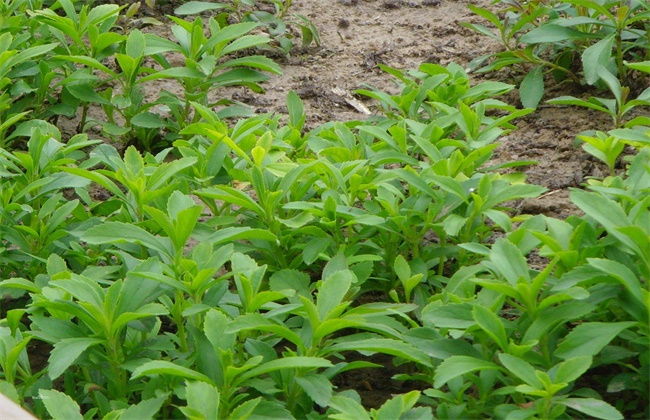
1. Cutting propagation
Cutting propagation can maximize the retention of the excellent characteristics of the variety and has the advantages of fast reproduction, simple operation, and low cost, so cutting propagation is the best choice for stevia planting in the south. First, choose a place with fertile soil, shelter from the wind and facing the sun, convenient water sources, and higher terrain to establish a seedbed, then carry out seedling cultivation from August to October. Cuttings are cut directly from the top of stevia plants in the field. For cuttings used for propagating seedlings in spring and winter, they can be cut from autumn-propagated seedlings, and cuttings with 4-5 pairs of leaves are suitable. The best time for cutting is August to October in autumn or March to April in spring. A small arched shed can be used to maintain the temperature at 20-25 degrees, and a shade net should be used for covering. The cutting density can be determined according to the time; generally, in autumn and winter, appropriate sparse planting can be used to satisfy the space needed for the plants to grow for a longer period, while in spring, appropriate dense planting can be used for cuttings.
2. Old root overwintering propagation
Stevia old roots can be used to create a suitable environment in winter to ensure their safe overwintering. After the temperature rises in early spring, a certain number of seedlings can sprout from the root nodes of the old roots. When the seedlings grow to 4-5 leaves, they can be used as cuttings for spring propagation, or they can be directly divided and planted. The old roots should be old roots of field stevia with excellent varieties, high purity, and robust growth. When the average temperature is 15-20 and the weather is clear, dig out the old roots, tidy them and remove residual branches and leaves, keep them 2-5 cm, heel them in a furrow, cover with fine soil, and then cover with film for heat preservation. If a cold wave occurs, insulation materials such as straw curtains need to be added so that the temperature inside the film is not lower than minus 3 degrees, ensuring their safe overwintering. After the temperature rises the following year, the old roots can sprout seedlings.
3. Seed propagation
Although stevia grows widely, in the north, affected by low temperatures, seedlings and old roots often cannot overwinter safely, so most northern regions use seed propagation. The sowing time is generally when the temperature stabilizes above 10 degrees in early spring. The seedling site is also selected as a plot with fertile soil, shelter from the wind and facing the sun, convenient water sources, and higher terrain. Before sowing, the seeds need to be sun-dried, and the pappus should be rubbed off to improve the germination rate and germination vigor. Then the seeds should be treated by soaking in warm water, or soaked in chemicals, to prevent the spread of pests and diseases. For sowing, mix the seeds and fine sand evenly and then broadcast or drill them. Generally, sow 3-5 grams per square meter. After sowing, cover with a thin layer of soil and gently press with a wooden board so that the seeds and soil are in close contact. The seedbed can be covered with rice straw to preserve heat and moisture and facilitate emergence.
The above is an introduction to stevia seedling cultivation techniques. We hope it can help you. To learn more related knowledge, please follow us.