Detailed Explanation of Fertilizer and Water Management Techniques for Goji Berry
In daily life, we are all familiar with goji berry. It has extremely high nutritional value and medicinal value, and good economic benefits. In the process of growing goji berry, fertilizer and water management is the top priority in the entire management work. So how should fertilizer and water management be carried out for goji berry? Follow the editor and take a look.
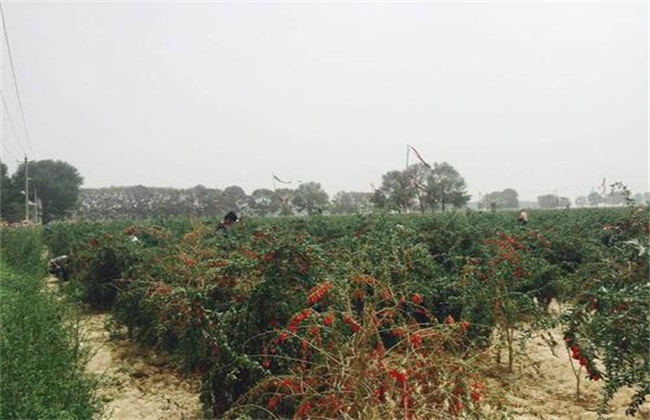
1. Irrigation
After goji berry is planted, it should be irrigated immediately. After that, according to soil moisture conditions, irrigate again after 7-10 days. After confirming that the goji berry has survived, irrigate for the third time. This irrigation should be combined with the first fertilization. After that, irrigation can be carried out together with topdressing. Generally, the number of irrigations throughout the year should be controlled at 6-8 times. The number of irrigations mainly depends on the soil drainage situation. Those with poor water retention capacity should be irrigated more, and those with poor drainage performance should be irrigated less. In short, when irrigating in the year of goji berry planting, on the premise of not affecting the normal growth of goji berry, irrigate as little as possible. This can encourage the goji berry root system to grow downward and lay a good foundation for a well-developed root system.
2. Fertilization
Goji berry is a plant that likes fertilizer and is also tolerant of fertilizer. Especially decomposed organic fertilizer has an astonishing degree of fertilizer tolerance. Under the premise of applying organic fertilizer, it also has strong tolerance to inorganic fertilizer. Therefore, if you want to obtain high yield from goji berry, then fertilization work must be done well. First, before planting, apply 2000 kg of organic fertilizer per mu. The fertilizer applied in the planting holes is required to be mixed before planting. The first topdressing should be mainly phosphate fertilizer, supplemented by nitrogen fertilizer, and applied deeply, so as to promote the root system to grow deep and benefit the tree crown in regrowing and producing more shoots. The second topdressing should be mainly nitrogen-phosphorus-potassium compound fertilizer, generally applied during the flowering period, which can promote flowering and fruiting and also encourage more branching. The third topdressing should be a mixture of nitrogen and phosphorus, in which the proportion of nitrogen fertilizer should be higher than that of phosphate fertilizer. At this time, it is applied during the fruit ripening period in order to ensure the nutrients needed for fruit ripening, generally about 100 grams per plant.
3. Applying Base Fertilizer in Autumn
After the fruit is harvested, fertilization at this time is the basic work of the year. At this time, organic fertilizer is the main component, supplemented by chemical fertilizer. The amount of fertilizer applied should be more than double the organic fertilizer applied in the planting holes, and a certain amount of slow-release inorganic fertilizer should also be added. This fertilization is best done before mid-October to promote further recovery and growth of the root system. The base fertilizer should be applied deeply. The method is to dig a linear trench along the outer edge of the tree crown, apply 1000 kg-1500 kg per mu, and 3 kg-5 kg per plant, mix evenly with soil, and then close the pit.
The above is an introduction to fertilizer and water management for goji berry. I hope it can help you. To learn more related knowledge, please follow us.