What causes dead yam plants? A detailed guide to prevention and control methods
During yam cultivation, dead plants are a fairly common phenomenon, especially in continuous cropping fields, where the problem is particularly severe and brings serious economic losses to growers. So what causes dead yam plants? How should they be prevented and controlled? Follow along with the editor to find out.
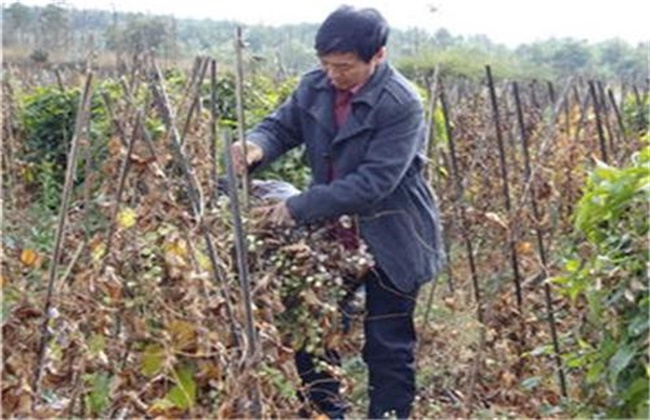
1. Brown spot disease
This disease mainly damages leaves and stems. The lesions on leaves are round or oval, grayish white to dark gray in the center with dark brown edges, and later small black dots form on the diseased areas. Stem lesions are irregularly shaped, grayish white in the center with black around the edges, and the lesions merge together, causing the whole plant to turn black and die. For brown spot disease control, at the early stage of onset you can use a 1000-fold dilution of 70% thiophanate-methyl or a 3000-fold dilution of 80% ethylicin for root drenching, which gives good results.
2. Fusarium wilt
At the early stage of onset, this disease mainly shows spindle-shaped brown lesions at the base of the stem. The lesions cause the epidermis at the stem base to rot, the upper leaves to yellow and drop off, and the vines to wither and die, while the inside of the diseased stem turns brown. When the storage roots are infected, round and irregular brown lesions form around the lenticels, and finally the plant withers and dies from these symptoms. For Fusarium wilt, farmers can use a 1000-fold dilution of 50% chloroisobromine cyanuric acid, or a 600-fold dilution of 40% thiophanate-methyl sulfur suspension concentrate, or a 500-fold dilution of 70% mancozeb for root drenching.
3. Brown rot
This disease mainly damages the tubers of yams. After the tubers are infected, the diseased areas show irregular brown rot-like spots that are slightly sunken, and when cut open the discoloration of the diseased area can be seen. In severe cases, all the tissue around the diseased area rots. For this disease, vegetable growers can use a 1000-fold dilution of 70% thiophanate-methyl or a 3000-fold dilution of 80% ethylicin for root drenching control, once every 7-10 days, for 2-3 consecutive applications, to achieve thorough control.
The above is an introduction to the causes of dead yam plants and prevention and control methods. We hope it helps you. To learn more related knowledge, please stay tuned to us.