Detailed Guide to Spring Watering Methods for Greenhouse Tomatoes
In recent years, as greenhouse vegetable cultivation has become popular, more and more vegetables have been grown in greenhouses, and tomatoes are naturally no exception. Tomatoes need a lot of water during their growth, so watering requires particular attention when growing tomatoes in greenhouses. So how should greenhouse tomatoes be watered in spring? Let's take a look together.
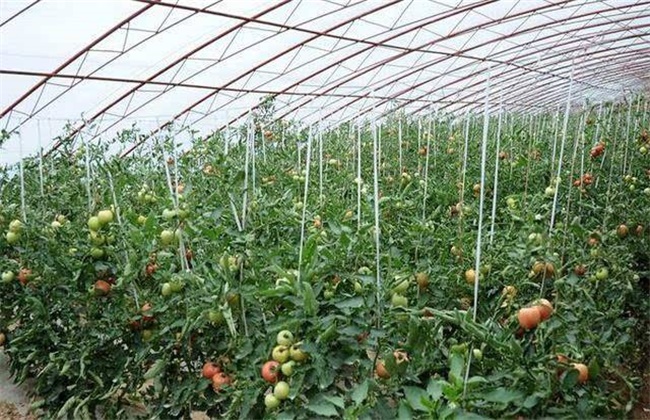
1. Water according to the growth stage
During the germination stage, tomatoes require a soil relative humidity of around 80%, because the seeds need to absorb a large amount of water during germination. During the seedling stage, the soil relative humidity should be around 60%; at this time, water should be controlled to promote well-developed root growth. However, if it is too dry, it will also affect flower bud differentiation. Generally, watering is controlled after transplanting, but it should not be excessive; it should not go below 60% at the lowest. Generally speaking, tomatoes are watered at the time of transplanting, then watered again 3-5 days after transplanting to help the seedlings recover, and watered once more when the fruit reaches the size of an egg yolk. As the plant grows and develops, if there are many fruits and ventilation increases, transpiration will also increase; at this time, humidity should be controlled at around 75-80%, and the amount and frequency of watering should be increased.
2. Water according to the crop cycle
For greenhouse tomatoes grown in early spring, they should be watered promptly after fruit set to meet their water needs during that period. For overwintering tomatoes in warm winter-type greenhouses, generally enough water is applied at transplanting in October, followed by timely hoeing and shallow cultivation to conserve soil moisture; until fruit set, no watering is needed unless there are special circumstances, and light watering should be the main approach to avoid a major drop in soil temperature. After fruit set, water promptly to meet the water needs of the fruit.
3. Water according to growth condition
Leaves that are dark green and glossy with unfolding young leaves indicate a uniform and suitable condition; if the young leaves are shrunken and not unfolding, the leaf color is dark green, and there is slight leaf drooping on sunny days, that indicates a lack of water and timely watering is needed. If the young leaves are excessively spread out, the leaves are large and thin, and there is too much guttation on the leaf surface, that indicates excessive water, and watering should be controlled to prevent excessive vegetative growth.
4. Watering time
Watering time also matters. During the growth stage, watering should be done on a sunny morning, followed by ventilation to remove moisture. It is not suitable to water in the afternoon, in the evening, or on cloudy and rainy days. Watering in the afternoon and evening leads to high humidity inside the greenhouse, which can easily cause pests and diseases to breed. Cloudy and rainy days are already humid; continuing to water will cause waterlogging damage. Even more so, do not water at noon; the temperature is high at noon, and watering will cause drastic changes in soil temperature, affecting the physiological functions of the roots. In other seasons, watering should be done in the afternoon, which can effectively lower the soil temperature.
The above is an introduction to spring watering methods for greenhouse tomatoes. We hope it helps you. To learn more related knowledge, please stay tuned to us.