Detailed Explanation of Betel Nut Taro Planting Techniques and Management Key Points
The betel nut taro is oval in shape with a thick, rough outer skin. When cut open, it reveals a betel-nut-like pattern inside, which is why it is named "betel nut." Its growing period is relatively short; planting begins around the Spring Equinox, and it can be harvested by Frost's Descent. So how do you grow betel nut taro? Follow along with the editor to find out.
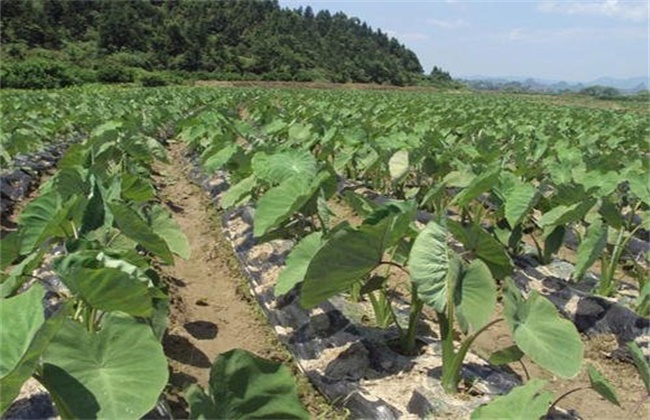
1. Careful Selection of Taro Seeds
Seed taro should be selected from field-grown corms that are free of pests and diseases and grow vigorously. Choose daughter taros from around the middle of the mother taro, requiring smooth, undamaged skin, freedom from pests and diseases, plumpness, thickness, hairs near the top, and uniform size. Before sowing, sun the seeds for 1-2 days and remove the surface hairs, which promotes earlier development of the seed taro. Select seed taros with plump buds, leaves 5-10 cm long, no pests or diseases, and good color for transplanting, to promote uniform sprouting throughout the field.
2. Planting
Betel nut taro is best planted when the temperature is above 15°C and the seed taro begins to sprout, generally from early March to early April, that is, completed around Qingming. Before planting, make ridges 1.2 m wide and 25-30 cm high, with a plant spacing of 25-30 cm and a row spacing of 45-55 cm, planting about 1700-1800 plants per mu.
3. Hilling and Weeding
After planting, do not forget to hill up the soil. Hilling can promote the growth of adventitious roots, enhance the plant's drought resistance, inhibit the growth of terminal buds, and effectively improve quality. The thickness of the hilling also directly affects yield and quality. Generally, hilling is combined with fertilization twice: the first about one month after planting, together with loosening the soil and weeding, with a hilling thickness of about 5 cm. The second hilling is carried out 20 days after the first, combined with fertilizing and pest and disease control. First drain any accumulated water and remove excess daughter seedlings.
4. Fertilizer and Water Management
Betel nut taro is a tuberous plant with a relatively high demand for potassium fertilizer. According to data, the ratio of nitrogen, phosphorus, and potassium required by betel nut taro is 1:0.5:1.5. In the early stage, the roots and leaves of betel nut taro grow simultaneously, so nitrogen fertilizer is mainly used at this time to promote rapid leaf growth. After entering the taro-forming stage, phosphorus and potassium fertilizers are mainly used, with only an appropriate amount of nitrogen fertilizer needed to maintain leaf growth.
The above is an introduction to betel nut taro planting techniques. We hope it helps you. To learn more related knowledge, please stay tuned to us.