What are the management measures before and after potato emergence?
The emergence stage of potatoes is a critical period for ensuring early emergence, full emergence, and strong seedlings, laying the foundation for a high yield, so management during this period is extremely important. So how should potatoes be managed before and after emergence? Follow the editor to take a look at the management measures before and after potato emergence.
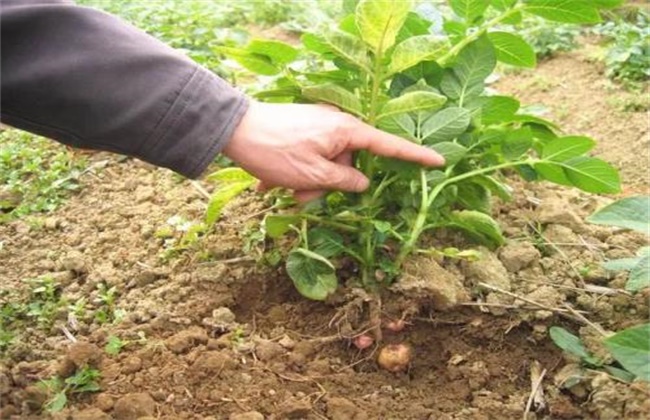
1. Thinning and final thinning of seedlings
After the potato seedlings emerge evenly, check the seedlings, thin them, and set the final spacing in time. Replant missing spots promptly to ensure full stands. After full emergence, thin and set the seedlings in time, removing weak ones and keeping strong ones when thinning. The first thinning should leave 3-4 plants per hill, and after the second thinning leave 1-2 plants per hill.
2. Cultivation and hilling
Cultivating and loosening the soil makes the tuber layer loose and breathable, which benefits root growth, stolon elongation, and tuber expansion. Before emergence, if the soil is compacted, loosen it immediately to facilitate emergence. After full emergence, carry out the first cultivation to a depth of 8-10 cm, combined with weeding, and carry out the second cultivation 10-15 days after the first. When potatoes are budding, carry out a third cultivation. The second cultivation should be shallow, and hilling is also needed at that time. The hilling thickness should not exceed 10 cm, so as to thicken the tuber-bearing layer, prevent tubers from being exposed, and avoid reducing quality.
3. Timely topdressing
Because potatoes take a relatively long time from sowing to emergence, after emergence apply sprout and seedling fertilizer early with clear manure water plus a small amount of nitrogen fertilizer to promote rapid seedling growth. At the budding stage, combine hilling with one topdressing of tuber-setting fertilizer. At this time, fertilizer should be mainly potassium fertilizer, with nitrogen fertilizer added, and the amount should be decided according to plant growth. After potatoes bloom, generally no more fertilizer is needed. If late-stage symptoms of fertilizer deficiency and premature aging appear, foliar spraying can be done with phosphorus and potassium fertilizers or trace elements.
4. Chemical regulation ⟧11⟧At the budding stage, use 35 grams of paclobutrazol per mu plus 60 kg of water for uniform spraying. On one hand, this can prevent potato plants from excessive vegetative growth, making plants shorter, leaves thicker, stems thicker, and leaf color darker; on the other hand, it can also promote underground growth, accelerate tuber expansion, and increase yield. At the same time, it is also necessary to do a good job in preventing and controlling late blight and controlling underground pests, to ensure a high and stable potato yield.
At the budding stage, mix 35 g of paclobutrazol with 60 kg of water per mu and spray evenly. On one hand, this prevents the potato plants from excessive vegetative growth, making the plants shorter, the leaves thicker, the stems stouter, and the leaf color darker; on the other hand, it also promotes underground growth, speeds up tuber expansion, and increases yield. At the same time, it is also necessary to do a good job in preventing and controlling blight and controlling underground pests, so as to ensure a bumper harvest of potatoes.
The above is an introduction to management measures before and after potato emergence. I hope it can help you. To learn more related knowledge, please follow us.