Detailed Explanation of Key Field Management Techniques for Rehmannia
Rehmannia has the effects of lowering blood sugar and protecting the liver, with extremely high medicinal value and broad market demand. It is now widely cultivated artificially across the country, and in the process, field management is an important part of achieving high yields. So how should rehmannia field management be done? Let's find out together.
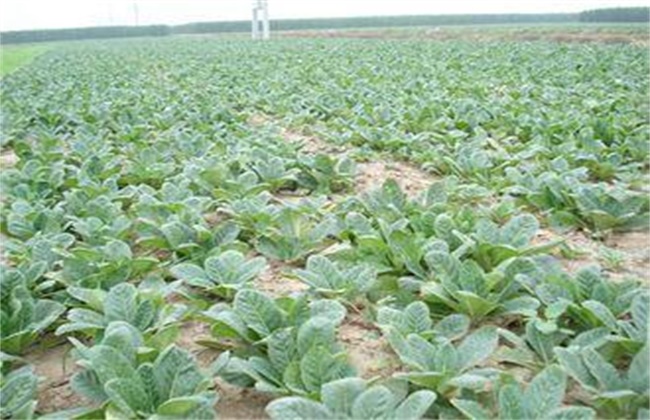
1. Straw mulching and thinning of seedlings
After planting rehmannia and covering with soil, rice straw or straw from other crops can be used to cover the bed surface. The purpose of this is to suppress weed growth and keep the soil loose, providing excellent moisture retention and benefiting the growth and development of rehmannia. 20-30 days after the seedlings emerge, excess seedlings can be removed during weeding. The principle is to remove the inferior and keep the superior, generally leaving 1-2 seedlings per hole, so that seedlings will not compete for water and fertilizer or cause poor field ventilation.
2. Intertillage and weeding
The root system of rehmannia is distributed relatively shallowly, so this should be noted during intertillage and weeding, and the number of intertillage operations should be minimized as much as possible. Too much intertillage may damage the root system and reduce yield, and in severe cases may cause plant death. Generally, only 1-2 intertillage operations are needed throughout the entire growing period. Be sure to cultivate shallowly, but when weeds are present, they must be pulled out promptly to avoid the breeding of pests and diseases.
3. Topdressing
One month after rehmannia seedlings emerge, a large number of fleshy roots form. After two months, the dry matter of the rhizome begins to increase sharply, and about two and a half months later the rows close, so topdressing must be completed before the rows close. Throughout the entire growing period of rehmannia, topdressing is needed 2-3 times. The first time is 15-20 days after full emergence of seedlings, the second topdressing is 20-30 days after the first topdressing, and the third topdressing depends on the vigor of the seedlings. At this time, topdressing is mainly nitrogen fertilizer, applying 1000-1500 kg of human and livestock manure or 3.5-5 kg of urea per mu.
4. Drainage and irrigation
If dry weather occurs after sowing, water should be applied promptly to increase the seedling emergence rate. 2-3 months after sowing, the rhizome forms rapidly. At this time, the demand for water is relatively high, and it is also the period when the rhizome is prone to rotting, so attention should be paid to reasonable irrigation and drainage of accumulated water, so as to meet the plant's water needs without causing rhizome rot.
The above is an introduction to rehmannia field management techniques. We hope it can help you. To learn more related knowledge, please stay tuned to us.