What are the prevention and control methods for lodging in plastic-film cotton?
We cannot do without cotton in our daily lives, and cotton is grown extremely widely in our country. In the process of cotton cultivation, lodging is one of the most troublesome new problems; if it is not dealt with in time, it will cause severe reductions in cotton yield. Below, the editor brings you prevention and control methods for lodging in plastic-film cotton, hoping to help everyone.
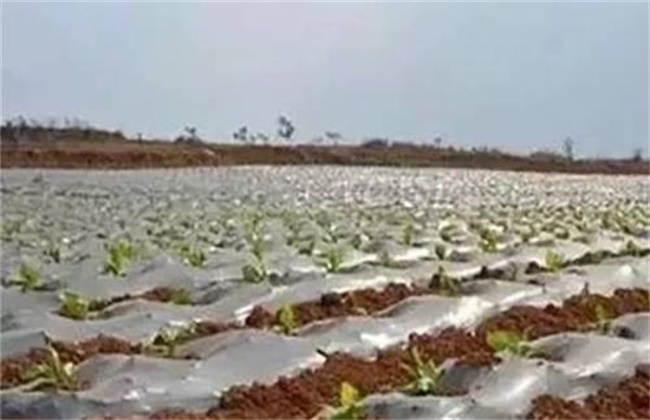
1. Remove the plastic film at the right time
Research from many places has shown that the main root of double-film cotton is cut off during transplanting, and a large number of lateral roots and fibrous roots grow in the shallow soil layer. Because temperature and fertilizer-water conditions are good, and in addition the soil fertility is sufficient, double-film cotton absorbs fertilizer and water more strongly than direct-seeded cotton at the squaring and flowering stages, and its vegetative growth and reproductive growth are also stronger than those of direct-seeded cotton. At this time, if the plastic film is removed at the right time and intertillage and earthing up are strengthened, double-film cotton will be able to give fuller play to its advantages. However, if the film is not removed for a long time, once extreme weather arrives, because the root system is distributed relatively shallowly and its supporting capacity is poor, lodging occurs very easily. Therefore, the plastic film must be removed at the right time, with careful management, to promote roots and protect roots; the suitable time for removing the film is the initial flowering stage.
2. Fertilization
Because the growth and development process of plastic-film cotton is 20-30 days earlier than that of direct-seeded cotton, and the consumption in the early stage is greater than that of direct-seeded cotton fields, management measures must all be moved forward accordingly, especially the rapid and sufficient application of flower and boll fertilizer. For each mu, 10~15 kg of urea should be applied as topdressing, or 10~15 kg of ternary compound fertilizer. For cotton fields lacking potassium, 5-10 kg of potassium fertilizer should be applied per mu. When the average number of bolls per cotton plant reaches 2-3, 15 kg of urea should be applied as topdressing per mu. If fertilizer and water management are neglected, then after boll setting the cotton will turn yellow over a large area, and in severe cases it will also be accompanied by physiological wilt and premature senescence.
3. Coordinate and balance growth
Because plastic-film cotton grows and develops relatively quickly, it is also very prone to excessive vegetative growth, so relevant measures must be taken to balance income and expenditure. After cotton enters the full squaring stage, spray the retarding plant growth regulator mepiquat chloride or chlormequat, using 2~3 grams or 8~12 milliliters per mu mixed with 40 kg of water. At the same time, also pay attention to spraying regulation agents to prompt the leaf color to quickly turn dark green; third, pay attention that no residual film is left in the field when removing the film, so as not to affect intertillage, earthing up, and management of the following crop; fourth, spray boron fertilizer 2~3 times, and advocate the use of high-content Sule boron.
The above is an introduction to prevention and control methods for lodging in plastic-film cotton. I hope it can help you. To learn more related knowledge, please continue to follow us.