How to manage hot peppers for high yields? These techniques you need to master
Peppers are an everyday vegetable in our lives, and there are many varieties of them. Among them, hot peppers are currently a relatively popular variety on the market, and the returns for farmers who grow them are fairly good. To further increase returns, the only way is to start with yield, so how can hot peppers be made high-yielding? Follow along with the editor to learn more.
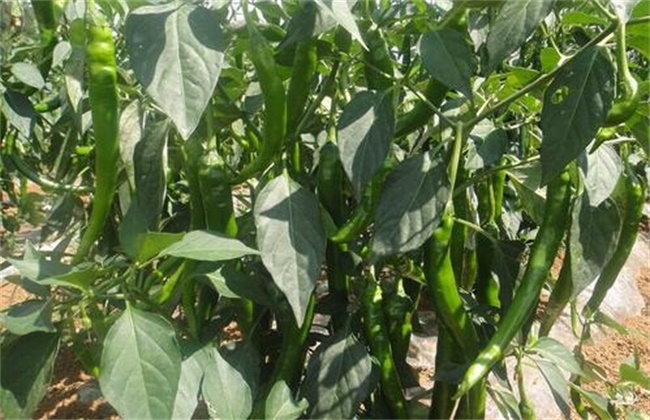
1. Scientific ventilation
During the flowering and fruiting period, hot peppers require a temperature between 15-35°C. If it is below 15°C or above 35°C, flower bud differentiation will be poor, and it is also very easy to cause flower and fruit drop. Before 10 a.m., the greenhouse temperature must not be higher than 30°C, otherwise it will affect pollination of hot peppers, so ventilation measures should be taken. About one hour after opening the greenhouse, the vents can be opened wide, and then the size of the vents and the ventilation time should be determined according to the outside temperature. This can both supplement carbon dioxide and keep the temperature within a suitable range. In the afternoon, when the greenhouse temperature reaches 17°C, start closing the greenhouse, and at night keep it between 15-18°C, so that nutrients are transported normally during this period, avoiding excessive nutrient consumption caused by high night temperatures, which can lead to excessive vegetative growth and poor flowering and fruiting.
2. Preventing plant death
Hot peppers are a shallow-rooted crop. Their main root is not very developed, the root regeneration ability is relatively poor, and they are afraid of waterlogging and not tolerant of salinity, so the soil is required to be loose and breathable, and high-ridge cultivation should be adopted. High-ridge cultivation can not only enhance soil aeration and ensure the oxygen needed for root growth, but also help increase soil temperature, making it especially suitable for autumn-winter and early-spring production. In addition, high-ridge cultivation can also prevent root suffocation and root rot caused by excessive watering in early spring, and can also quickly drain rainwater after rain.
3. Reasonable pruning
Pruning can improve field ventilation and light penetration, which is not only beneficial to the synthesis and transport of photosynthetic products, but also helps increase yield and commercial value, while also helping prevent the occurrence of pests and diseases. Generally, hot peppers are mainly pruned using the four-main-branch method, removing side branches sprouting from the main branches to ensure the four main branches grow upward in a coordinated manner. Pruning is generally carried out after fruit set, because at this time the plant is shorter and field ventilation and light penetration are good, so side branches can be retained to bear fruit. After the side branches set fruit, pinch off the growing tip, leaving one leaf above the fruit. When harvesting the fruit, the fruiting side branches can be removed together. As the plant grows, branches and leaves interlace, which will affect ventilation and light penetration. Combined with fruit harvesting, remove the inner side branches together to prevent excessive nutrient consumption.
The above is an introduction to high-yield management techniques for hot peppers. We hope it can help you. If you want to learn more related knowledge, please keep following us.