What are the management methods for cucumbers during consecutive cloudy days?
The area planted with cucumbers in our country is very large. When growing cucumbers, we need to carry out management work according to changes in the weather. Cucumbers have a relatively high demand for temperature and light, so when consecutive cloudy days occur, it is very unfavorable to their growth. Therefore, when consecutive cloudy days occur, we should pay attention to strengthening management. So how should cucumbers be managed during consecutive cloudy days? Below, the editor brings you the management methods for cucumbers during consecutive cloudy days. Let's take a look!
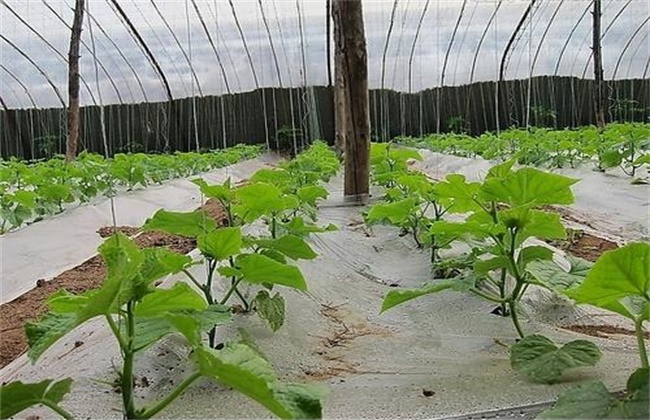
1. Increase light
In an environment of consecutive cloudy days, the natural light duration will decrease significantly. The light inside the greenhouse is seriously insufficient, which leads to a reduction in the content of photosynthetic substances in cucumber plants and excessive nutrient consumption, thereby causing premature aging of cucumbers. So on rainy and cloudy days, if the light inside the greenhouse is too weak, then the greenhouse film should be wiped in time to increase the light duration and intensity inside the greenhouse. This enhances leaf photosynthesis, increases the accumulation of photosynthetic substances, and reduces premature leaf aging. Then attention should also be paid to controlling temperature well. During consecutive cloudy days, the daytime temperature inside the greenhouse should be maintained at around 25 degrees, and at night it should be maintained at around 15 degrees.
2. Protect the root system
The root system of cucumber plants is relatively shallowly distributed, generally concentrated in the topsoil layer at a depth of about 20 cm. Therefore, it is very sensitive to changes in soil temperature, water, and fertilizer. So during consecutive cloudy days, we should pay attention to protecting the root system well. During consecutive cloudy days, the transpiration of cucumber leaves is relatively low. Therefore, except when the soil is very dry, watering is generally not advisable. Avoid excessive humidity, which can cause root rot. After consecutive cloudy days, it is also not advisable to water immediately, because at this time the plants are in the recovery period and root activity is relatively poor. If watering is done too early, it will cause serious root damage and plant wilting.
3. Supplement nutrients
During consecutive cloudy days, the nutrients produced by the plants themselves are very limited. If cucumber plants lack nutrients, it is very unfavorable to their growth. Therefore, we should also pay attention to supplementing nutrients well. Foliar fertilizers should be the main method, supplementing nutrients to the leaves, which can effectively enhance the stress resistance of the plants. Foliar fertilizers can include complete-nutrient foliar fertilizer, chitin, and brassinolide, etc. They can effectively promote the synthesis of chlorophyll in cucumber leaves and enhance the photosynthetic efficiency of cucumbers.
4. Management after consecutive cloudy days
Management work after consecutive cloudy days turn sunny is also very important. Because the leaf area of cucumbers is relatively large, their transpiration coefficient is also very high. But because the root system is not well developed, it is prone to damage. Therefore, after the weather suddenly turns sunny, the sharp changes in light and temperature will cause great harm to cucumber plants. So after it turns sunny, we should pay attention to shading work, adjust light and temperature well, and let cucumbers gradually adapt to environmental changes. At the same time, apply an appropriate amount of root-nourishing and root-promoting fertilizer, combined with fully water-soluble fertilizer, to prompt cucumber plants to recover their growth as soon as possible.
The above is a brief introduction to the management methods for cucumbers during consecutive cloudy days. That is all for today's introduction. This article is for reference only, and I hope it can help everyone!