Detailed Explanation of Key Techniques for Off-Season Bitter Melon Cultivation
Bitter melon is a vegetable deeply loved by consumers, and its market season is summer. As market demand continues to expand, in order to meet consumer demand for it in different seasons, off-season cultivation has become the choice of farmer friends. So how should bitter melon be cultivated off-season? Let's take a look together below.
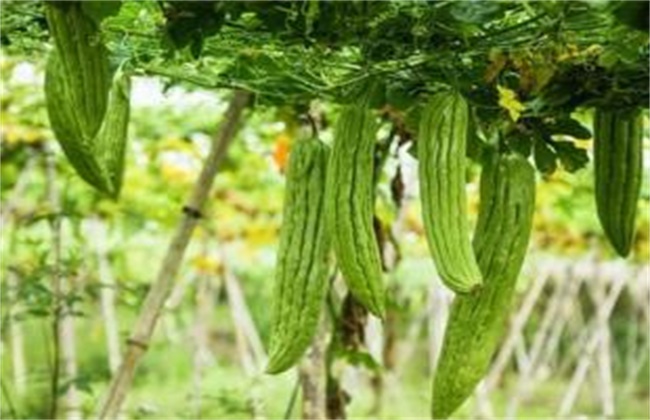
1. Select Good Varieties
Bitter melon itself comes to market in summer, so it has strong heat tolerance but weak cold resistance. Therefore, for off-season cultivation, the first priority is to select varieties that are cold-resistant, have low fruit-setting nodes, and mainly bear fruit on the main vine. For example, Hanzhong Changbai, Zhongdu No. 4, Yunnan Dabai Bitter Melon, etc. The fruits of these varieties are straight and long, and their disease resistance and stress resistance are relatively strong, making them suitable for off-season cultivation.
2. Cultivate Strong Seedlings
For off-season cultivation, winter and spring can be chosen, and temperatures in these two seasons are generally low, so it is necessary to use heated hotbeds in greenhouses for seedling raising. Because the seed coat of bitter melon is relatively thick and hard in texture, germination is extremely slow at low temperatures. Therefore, before sowing, the seeds can be scalded with warm water at 50-60 degrees while stirring continuously until the water temperature drops to 30 degrees, then continue soaking overnight, and then place them in an environment of 30-35 degrees for germination acceleration, washing once a day with warm water, draining, and continuing germination acceleration. Generally, buds will emerge in about three days. Because
the seed coat is relatively thick, germination is uneven, so the seeds that germinate first should be picked out in batches, wrapped in a wet towel, and placed in a low-temperature place for bud hardening. Sow after most of the seeds have germinated.
3. Deep Plowing of Soil
Bitter melon has a well-developed root system, and the main root can reach 3 m deep. Therefore, when preparing the land, the soil should be deeply plowed more than 40 cm. Combined with basal fertilization, apply 5000 kg of fully decomposed farmyard manure, 50 kg of potassium sulfate compound fertilizer, and 150-200 kg of soybean cake per mu to meet the nutrient needs of bitter melon throughout the entire growth period. After deep plowing and land preparation, irrigate, close the greenhouse half a month before planting, cover the ground with old plastic film, and seal the greenhouse at high temperature for ten days to half a month to kill most of the diseases and pests in the soil, so as to prevent the occurrence of some diseases and pests during the growth period.
4. Management After Planting
After planting, the first task is to control temperature and regulate humidity. During the seedling recovery period, the greenhouse temperature should be raised to promote seedling recovery. In addition to heat preservation and freeze prevention, appropriate ventilation is also needed during the day. As the temperature rises, ventilation and dehumidification should be done well. When the daily average temperature stabilizes at 25 degrees, remove the bottom skirt film of the greenhouse and keep the top film to prevent rain. Bitter melon likes fertilizer and moisture, so under sufficient fertilizer and water conditions it grows well, with high yield and good quality. Therefore, on the basis of applying sufficient basal fertilizer, fertilizer and water management should also be strengthened during the growth period. However, fertilization should be light first and heavy later to prevent seedling burn. During seedling recovery, applying dilute manure water is sufficient. During the vigorous growth period and flowering and fruiting period, heavy application is required. After each harvest, foliar fertilizer of urea and potassium dihydrogen phosphate should be sprayed. In addition, because bitter melon has strong branching ability and the greenhouse cultivation density is high, it is very easy to cause luxuriant branches and leaves, resulting in poor ventilation and light penetration, consuming more nutrients, but bearing fewer fruits. Therefore, pruning should be strengthened, and trellises should be set up to guide the vines.
The above is an introduction to off-season bitter melon cultivation techniques. I hope it can help you. To learn more related knowledge, please continue to follow us.