Severe fruit drop in star anise: how to prevent and control it? A detailed guide to practical methods
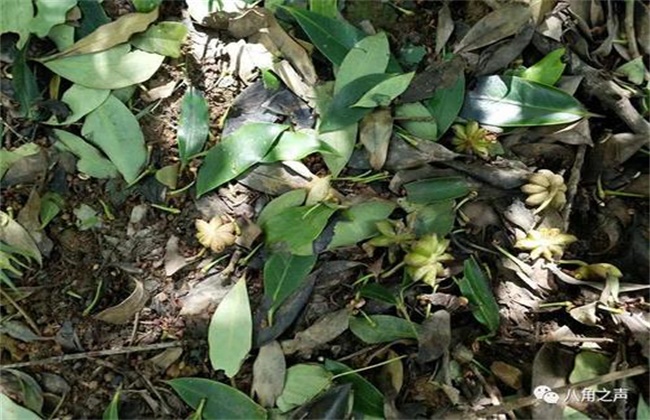
During star anise cultivation, farmers often face the phenomenon of star anise fruit drop, which severely affects star anise yields and causes great economic losses to farmers. So is there any way to reduce star anise flower and fruit drop and thereby increase star anise yields? Follow the editor to learn about it.
1. Reasonable thinning
If the forest is too dense and light is insufficient, the growth of plants will inhibit one another, which is unfavorable for the growth and development of star anise. Tree vigor stops, there are few fruiting branches, the permeability within the forest is poor, and it is highly susceptible to pests and diseases. Therefore, for mature forests with a density above 40 plants per mu, thinning should be carried out in a timely manner. When thinning, it should be done year by year according to the principles of removing the inferior and keeping the superior, removing the weak and keeping the strong, and removing the dense and keeping the sparse, ultimately retaining 30-40 plants per mu. Thinning can ensure good permeability within the forest and improve the growing environment, and it has a good promoting effect on flowering and fruiting as well as flower and fruit retention.
2. Weeding and land reclamation
Land reclamation in star anise forest land is extremely important for high star anise yields. The growth of weeds and shrubs seriously consumes the nutrients in the forest land, so weeding in the forest land should be carried out promptly in spring and autumn. In addition, land reclamation can improve soil structure, supplement water sources, and promote root growth, thereby enhancing root absorption capacity and promoting flower bud differentiation and normal development of young fruit.
3. Formula fertilization
Star anise flowers remain on the branches all year round, so the tree body consumes relatively large amounts of nutrients. If nutrient supply is insufficient, it will cause nutrient imbalance in the tree body, affect the growth and development of star anise, and cause a large amount of flower and fruit drop. Therefore, topdressing must be strengthened to maintain nutrient balance in the plant body, but soil-testing formula fertilization should also be implemented. This can not only meet the nutrient needs of star anise for reasonable new shoot growth and flowering and fruiting, but is also a prerequisite for ensuring high and stable star anise yields. In addition to formula fertilization, foliar fertilizer should also be sprayed outside the roots during the flowering and fruiting period of star anise, especially some trace elements, so as to quickly supplement various nutrients and achieve the purpose of retaining flowers and fruit.
4. Pest and disease control
The main insect pests of star anise include weevils, leaf beetles, golden flower beetles, and inchworm moths, while the main diseases are anthracnose, sooty mold, algal leaf spot, sunscald, and powdery mildew. For the prevention and control of star anise pests and diseases, the principle of giving priority to prevention and combining prevention with control should be adopted. First, forecasting work should be done well. Among pests and diseases, anthracnose is the most serious, and it can harm everything from seedlings to young trees, heavily producing trees, and aging trees. Therefore, controlling anthracnose is an extremely important part of the star anise planting process.
The above is an introduction to methods for preventing and controlling severe fruit drop in star anise. We hope it can help you. If you want to learn more related knowledge, please stay tuned to us.