Detailed Explanation of Pepper Grafting Methods and Technical Points
Pepper is a very popular vegetable in China, and eating peppers in moderation is of great help to human health. At present, most pepper seedling-raising methods are based mainly on grafting, which can effectively increase pepper yield and variety quality, thereby improving growing returns. But many people also do not know how to graft peppers. So today the editor brings you pepper grafting techniques. Let us take a look together below!
1. Cleft grafting
Cleft grafting is further divided into full cleft grafting and half cleft grafting. Full cleft grafting means cutting the entire stem cross-section of the rootstock seedling open; this method is suitable when the scion is similar in thickness and size to the rootstock seedling. Half cleft grafting means cutting open about half of the transverse diameter of the rootstock seedling's stem cross-section, which is more suitable when the scion is thinner. With cleft grafting, the scion is farther from the ground, so the probability of attack by pathogenic bacteria in the soil is lower, disease prevention ability is strong, and the grafting survival rate is high. When carrying out cleft grafting, the pepper scion should keep about 3 true leaves and be free of pests and diseases, and the rootstock should have about 4 true leaves with a height kept above 10 cm. However, the procedure of cleft grafting is rather troublesome and the efficiency is not high, so it is suitable for small-scale operations.
2. Insertion grafting
Insertion grafting means using a bamboo stick to poke a small hole roughly the same thickness and size as the scion at the top or upper end of the rootstock seedling. Then, after trimming the bottom of the pepper scion, insert it directly into the small hole in the rootstock seedling. Insertion grafting can increase the contact area between the rootstock and scion, promote nutrient exchange between the rootstock and scion, and thereby improve the survival rate of the scion. Moreover, insertion grafting has few steps and is quite efficient. However, it requires a relatively small scion, mostly at the seedling stage. The number of true leaves on the scion should be kept at about 2, while the rootstock should have about 3, with a height of 6 cm.
3. Tube grafting
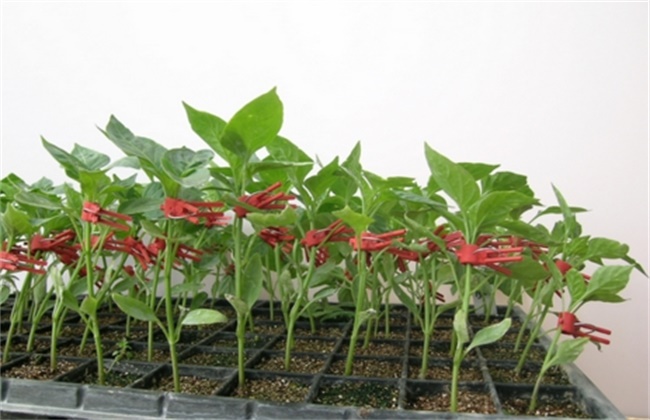
Tube grafting is a grafting method that has gradually become popular in recent years. It is an optimized grafting method based on the splice grafting method. In the past, grafting clips were mainly used for fixation, while tube grafting mainly uses a plastic tube about 1.5 cm long for fixation. The plastic tube has an inward elastic tension that can ensure close contact between the rootstock and scion. Moreover, the tube has relatively strong elasticity, and as the grafted seedling grows, the graft union will continue to swell. The plastic tube can then continuously enlarge its opening as it swells and finally fall off automatically, which can improve management efficiency considerably.
The above is a brief introduction to pepper grafting methods. There are many pepper grafting methods. When grafting, we should reasonably choose a suitable grafting method according to the pepper variety and our own planting scale, so as to ensure the grafting survival rate and improve economic benefits. That is all for today's introduction. This article is for reference only, and we hope it can help everyone!