How to manage peppers after grafting? Detailed explanation of the key technical points
Pepper is a vegetable that many people enjoy eating very much, and it is grown all over China. In the past, when growing peppers, the fertilization methods were mostly based on sowing and raising seedlings. Now, as growing techniques have become more and more mature, grafting has become the main method of raising pepper seedlings. After peppers are grafted, their management work is very important. So how should they be managed after grafting? Below, the editor will give you a brief introduction. Let's take a look!
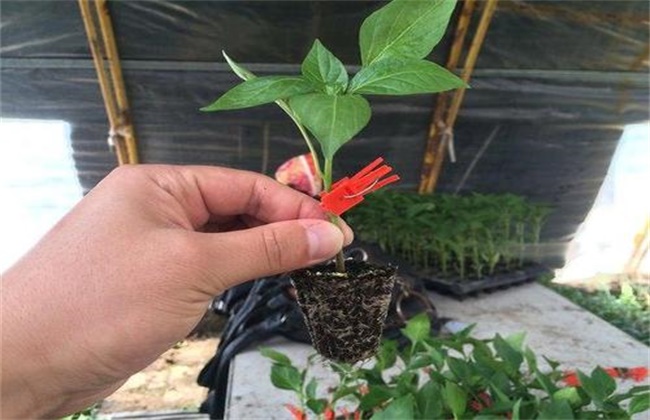
1. Temperature management
After grafted peppers are planted, the first management task we need to do well is temperature management. If cultivating in protected facilities, then after planting, the temperature should be kept within the range of 20-24 degrees, and the nighttime temperature must not be lower than 15 degrees. If it exceeds this range, then it is very unfavorable for pepper growth. So if the outside temperature is below 10 degrees, then straw mats should be added in time to do a good job of insulation. And if it is autumn-delayed cultivation, then attention should be paid to doing a good job of cooling. However, in the later stage of growth, attention should still be paid to insulation to ensure that the temperature inside the protected facility is not lower than 5 degrees.
2. Fertilizer and water management
After peppers are grafted, fertilizer and water management is also very important. After planting, when we water, it should be done on sunny days. Before the plants have firmly set the first pepper, the amount of watering should still be controlled to promote seedling establishment. Then, when entering the stage when the paired peppers are swelling, watering and fertilizing should be carried out together. Usually, ordinary water-soluble fertilizer is used per mu, with the amount kept at about 20 kg. When watering, the main principle should be to keep the soil alternating between dry and moist. The amount of topdressing must not be too much, and the principle should be small amounts applied multiple times. Then, according to the growth vigor of the grafted seedlings and the soil conditions, reasonably choose the type and amount of fertilizer.
3. Plant adjustment
Plant adjustment means doing a good job of pruning the grafted peppers. When the grafted seedlings have grown to a certain extent, all side branches growing below the first pepper should be cut off. If the plant's growth vigor is relatively weak, then the first pepper should also be removed at the same time to strengthen the pepper's growth vigor. Then make a high-yield frame, and as the peppers continue to grow, their fruiting position moves upward. Attention should also be paid to removing old, weak leaves and yellow leaves, and carrying them together with branches out of the field to avoid pests and diseases and create a good growing environment for the grafted pepper seedlings.
4. Pest and disease control
Because peppers are grown by grafting, soil-borne diseases generally do not occur. However, the occurrence of other pests and diseases cannot be ruled out. We should focus on the prevention and control of viral diseases, soft rot, aphids, whiteflies, and other pests and diseases. The main approach is still prevention first, strengthening management, controlling fertilizer and water well, and maintaining a pollution-free environment. Then frequently check the growth of the grafted seedlings. When abnormal conditions occur, promptly identify the cause, and then apply the right medicine. For example, for viral diseases, moroxydine hydrochloride or copper acetate wettable powder can be used for control. If it is pests such as aphids and whiteflies, then abamectin emulsifiable concentrate and other liquid sprays can be used for spraying control.
The above is a brief introduction to how to manage peppers after grafting. That is all for today's introduction. This article is for reference only, and I hope it can help everyone!