What should be noted when grafting peppers?
There is still a great deal of pepper cultivation in our country, and our country has a very large number of pepper varieties. No matter what the variety is, they are all relatively popular. When cultivating peppers, in order to improve the yield and growth capacity of peppers, the seedling-raising method is mostly based on grafting. And when grafting peppers, there are many points that require our attention. So what are the precautions for grafting peppers? Below, the editor will give everyone a brief introduction. Let's take a look together!
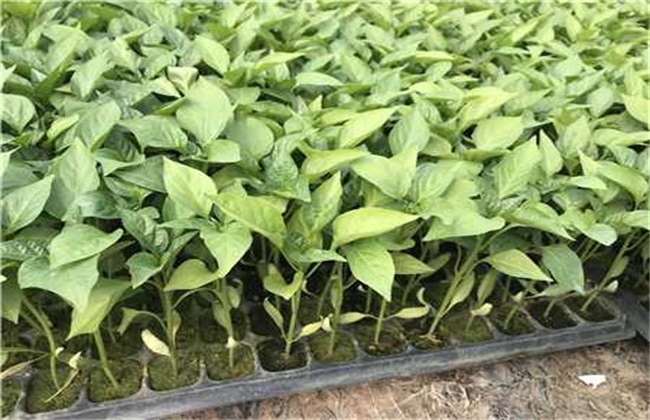
1. Selection of rootstock and scion
When grafting peppers, the first thing we need to pay attention to is selecting the rootstock and scion well. The rootstock must have strong resistance to soil-borne diseases, and attention must also be paid to understanding the affinity of the pepper scion. Avoid, due to poor affinity, causing pepper plants to develop diseases such as Fusarium wilt during the fruiting period. Then pay attention to selecting pepper cuttings well according to local market demand, consumption habits, and planting season. If overwintering cultivation is needed, then choose pepper varieties that are cold-resistant, shade-tolerant, and moisture-tolerant. If planting in early spring or for delayed autumn cultivation, then mainly choose early-maturing varieties.
2. Pay attention to sowing
The grafting method for peppers is generally based on cleft grafting, and there is a certain interval between the sowing times of the pepper rootstock and scion. Pay attention to dividing the cotton bolls of the two well; generally, the scion should be sown only after the two cotyledons of the rootstock have fully unfolded. Before sowing, the seeds of both the rootstock and scion should be scalded with hot water at about 60 degrees, and attention should also be paid to stirring during scalding. When the water temperature drops to about 30 degrees, soak the seeds for about 12 hours. Then remove them and place them in a 35-degree environment for germination, washing the seeds once a day with warm water. During germination, be careful not to touch oil stains, not to place them in heavy metal containers, and even more so not to wrap the seeds with plastic film.
3. Pay attention to the seedbed
The seedbed for planting peppers must first be guaranteed not to have grown solanaceous vegetables within three years, and then normal drainage and irrigation as well as convenient transportation must be ensured. If planting in early spring, mainly use east-west facing sunny beds. In addition to covering the greenhouse film well, when the outside temperature is below about 5 degrees, straw should be covered in time for insulation. For autumn delayed seedling cultivation, do a good job of rain protection on rainy days, and if the temperature is above 35 degrees, cool it down in time. When more than half of the seeds have sprouted white, they can be sown. Before sowing, water thoroughly, and after the water has completely seeped down, cover with about 1 cm of fine soil, then seal with plastic film. Maintain the temperature and humidity of the seedbed to speed up seed emergence.
4. Pay attention to management
Before pepper seedlings emerge, the daytime temperature should be maintained at about 30 degrees, and the nighttime temperature should be maintained at about 20 degrees. Then after the seedlings emerge, when the young seedlings grow about two true leaves, lower the daytime and nighttime temperatures by about 5 degrees. Then after the young seedlings break heart, until before 5 true leaves, keep the daytime temperature at 25 degrees, and keep the day-night temperature difference at about 10 degrees. Before grafting, usually do not water; if the seedbed is really too dry, then water lightly as appropriate. However, be careful to control the amount of watering well to avoid root rot from too much water. During the seedling growth period, carry out targeted fertilization work according to the morphology of the plant's true leaves, mainly with foliar fertilizer.
The above is a brief introduction to the precautions for grafting peppers. Today's introduction ends here. This article is for reference only, and I hope it can help everyone!