What are the key management points during the tillering stage of rice?
The tillering stage of rice is the critical period for determining effective tillers, and this is the foundation for achieving high yields, so management during the tillering stage of rice is extremely important. In order to cultivate strong seedlings and lay the foundation for a bumper harvest, management measures for the tillering stage must be carried out well. So how should rice be managed during the tillering stage? Let's take a look together.
1. Scientific water management
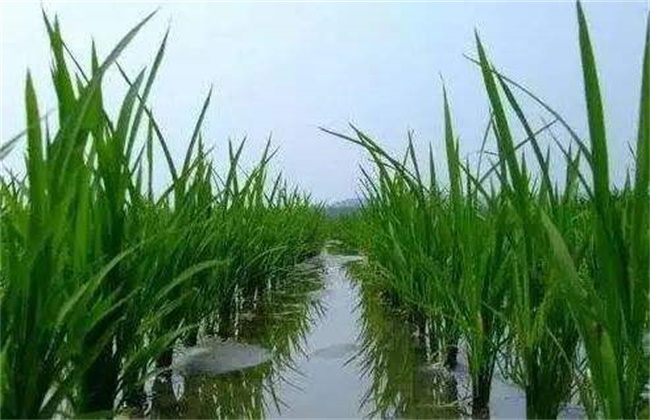
After rice transplanting, the field water level should be maintained at 3-4 cm, so that the field forms a relatively reasonable environment for heat and moisture retention, prompting new roots to sprout and the seedlings to quickly turn green. After entering the green-turning stage, the seedlings also enter the tillering stage. At this time, shallow water irrigation should be used, generally maintaining the water level at 2-3 cm. When the rice tillers reach the expected number of tillers, drainage and field drying should be carried out in a timely manner. Field drying can play a role of first suppressing and then promoting, and has a good effect on controlling the rice population, promoting the transformation from vegetative growth to reproductive growth, and cultivating large panicles with many grains. For field drying, the principle should be adopted of heavy drying for clay fields, low-lying fields, and overly fertile fields, and light drying for sandy fields and lean fields, generally drying until small cracks appear on the field surface, the foot does not sink when stepped on, the leaf color fades, and the leaves stand upright.
2. Apply tillering fertilizer early
The fertilizer requirement of rice gradually increases after the green-turning stage. At this time, the root system is mostly distributed in the surface soil, and the nutrient supply is insufficient, so tillering fertilizer should be applied early, generally 5-6 kg of urea per mu, evenly broadcast, while maintaining a shallow water layer. Fertilization should follow the principle of applying less to fertile fields and more to lean fields. Tillering fertilizer is generally applied immediately after the green-turning stage, but fertilization should not be flood-irrigated; it should be applied according to the seedlings. First apply 80%, and keep the remaining 20% depending on field growth conditions: apply less where growth is good and more where growth is poor. After fertilization, maintain the water layer and do not drain; after it dries naturally, irrigate again.
3. Pest and disease control
The main target is leaf blast. In the early stage of leaf blast, 30 g of 75% tricyclazole or 100 mL of 40% Fuji One emulsifiable concentrate can be used per mu, mixed with 30 kg of water and sprayed evenly. The main insect pests are rice stem borers and rice planthoppers. For the control of rice stem borers, generally 100 mL of triazophos emulsifiable concentrate or 50 g of Chundan per mu is used, mixed with 30 kg of water for spraying. For the control of rice planthoppers, 20 g of imidacloprid wettable powder or 100 mL of dichlorvos per mu is mixed with 30 kg of water for spraying.
The above is an introduction to the key management points during the tillering stage of rice. We hope it can help you. If you want to learn more related knowledge, please stay tuned to us.