What to Do When Rapeseed Seedlings Are Weak and Won't Grow Tall? Causes and Solutions
Spring plowing is about to begin, and rapeseed has successively entered the bolting and flowering stage. At this time, the main task is to prevent low-temperature cold damage, but some farmers have found that their rapeseed shows poor nutrition and won't grow tall. What causes this? How should it be solved? Let's take a look together.
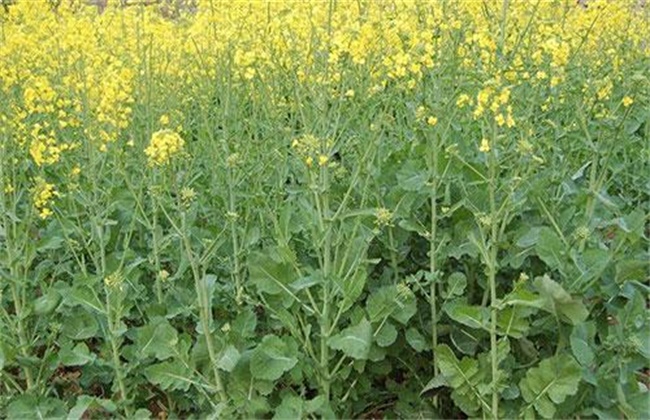
1. Waterlogging in the field
If rapeseed won't grow tall, the first thing to suspect is waterlogging in the field, which causes poor root growth and development, insufficient nutrient uptake, and therefore results in poorer seedlings and stunted height compared with normally growing rapeseed. This is especially likely to occur in rapeseed fields following a previous crop, mainly because drainage ditches were not properly opened and drainage was not carried out in time after the Start of Spring. When there is waterlogging in the field, low temperatures can also easily cause freezing damage, so special attention must be paid.
Solution: For waterlogging in the field, the first thing to do is clean the ditches and drain water in time to reduce the harm caused by waterlogging. Then spray the rapeseed field with monopotassium phosphate, multi-element micronutrient fertilizer and brassinolide via foliar fertilizer to speed up rapeseed growth, and afterward apply appropriate green-up and bolting fertilizer to promote normal rapeseed growth.
2. Fertilizer deficiency
If waterlogging in the field is ruled out, then it is very likely caused by fertilizer deficiency. Rapeseed is a crop with a relatively high fertilizer requirement. Nitrogen deficiency causes short plants, narrow leaves, and yellow-green leaf color, and in severe cases the leaves at the stem base turn red; phosphorus deficiency causes the lower leaves to turn purple and growth to be slow; boron deficiency not only causes flowers that bloom but do not set seed during the flowering stage, but boron deficiency at the seedling stage also causes poor root development, swollen and cracked root crowns, leaves with margins curling outward and appearing purplish-red, and yellow-brown central leaves.
Solution: According to the colors appearing on the rapeseed leaves, supplement the corresponding nutrient elements. When fertilizing, pay attention to balancing nitrogen, phosphorus and potassium fertilizers, and apply fertilizer reasonably according to rapeseed growth. For those with poor growth before overwintering, apply winter fertilizer in time; for those with good growth, it may not be needed. Boron fertilizer can be applied as a base fertilizer. If it was not applied as a base fertilizer, boron fertilizer can be sprayed at the seedling stage, bolting stage and early flowering stage.
3. Rapeseed clubroot
If the first two are ruled out, then it is damage from rapeseed clubroot. In recent years, rapeseed clubroot has occurred increasingly year by year in the Yangtze River Basin, mostly from autumn to the beginning of spring. This is a neglected disease, especially because farmers do not know much about it. In the early stage of the disease, symptoms on the upper part of the plant are not obvious. Some rapeseed plants show yellowing leaves and slowed growth. When the rapeseed plant is pulled up, spindle-shaped tumors can be seen on the roots. If slow growth and yellowing leaves appear in the field, you can pull up a few plants to check and diagnose whether it is clubroot.
Solution: Pull out diseased plants in time and treat the diseased holes with quicklime. When the condition is severe, spray the rooting agent diethyl aminoethyl hexanoate or 22.5% picoxystrobin 35-45 milliliters per mu, applying 2-3 times consecutively at 7-day intervals to control the condition.
The above is an introduction to the causes and solutions for weak rapeseed seedlings that won't grow tall. We hope it can help you. To learn more related knowledge, please follow us.