Detailed Explanation of Key Techniques for Early Rice Transplanting and Management
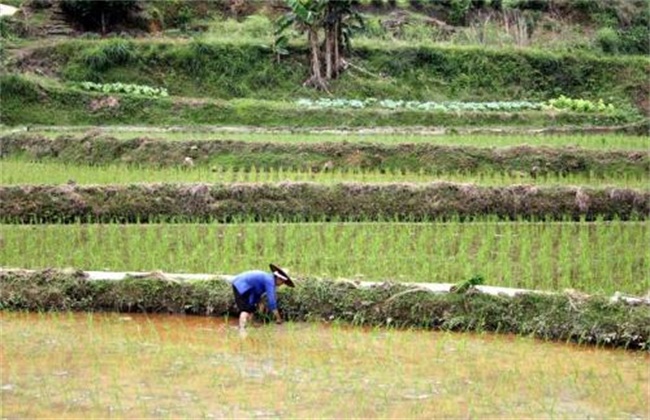
Right now is the early rice transplanting period in the south, and this year's climate in southern China is very favorable for early rice transplanting. Moreover, this climate will continue for some time to come, and with the epidemic situation already easing, experts are advising farmers to seize the time to carry out transplanting work. They have also provided guidance on early rice transplanting. Let's take a look together below.
1. Timely sowing and seedling raising
As temperatures rise, each region should select early rice varieties suited to local conditions that are high-yielding, of good quality, strongly stress-resistant and widely adaptable. Before sowing, preparatory work such as sunning the seed, seed selection, seed soaking and sprout promotion should be done well. Where conditions allow, industrialized centralized seedling raising can be adopted; when the daytime temperature is stable at 12 degrees, avoid cloudy and rainy days and sow during a clear spell. In the middle and lower reaches of the Yangtze River, early rice sowing should be completed before Qingming as far as possible, while in South China, the main stems should take advantage of the recent favorable weather to speed up seedling transplanting. For direct-seeded fields, close attention should be paid to weather changes, sowing should be done at the right time, and dead seedlings and rotten seedlings should be prevented.
2. Strengthen seedling management
Because the types of early rice seedling fields in the middle and lower reaches of the Yangtze River are diverse, and there are differences in seedling age or the growth period in the seedling field, classified management of seedlings should be strengthened according to the actual local seedling conditions to ensure strong seedlings are transplanted into the field. For those using insulated seedling raising, ventilation should be carried out in good time to prevent it from failing to occur; when sustained high temperatures occur, the film should be uncovered promptly for ventilation so as to avoid high-temperature damage to the seedlings. In weather with long rain followed by sudden clearing, never suddenly uncover the film or blindly apply quick-acting fertilizers such as urea; first ventilate to harden the seedlings and then uncover the film, and the seedling bed should be sprinkled or irrigated with water while the film is being uncovered. When the seedlings have one heart and one leaf, keep them moist at that time to strengthen the seedlings and prevent excessive growth, and at the same time pay attention to preventing disease. At the two-leaf-one-heart stage, ventilate to harden the seedlings and cultivate strong seedlings; at the three-leaf-one-heart stage, uncover by day and cover by night, and before transplanting apply a low-concentration urea solution.
3. Timely transplanting
When the temperature is stable at 15 degrees, transplant during a clear spell. In South China, strive to complete transplanting around Qingming, and spray a green-returning agent 5-7 days after transplanting. For machine-transplanted fields, improve the quality of ploughing and field preparation; before transplanting, the field should be allowed to settle, so as to transplant early at the right time, strive for shallow transplanting and appropriately increase density. For hand-transplanted or throwing-transplanted fields, ensure transplanting density and improve uniformity. For direct-seeded fields, strengthen field management according to sowing and emergence conditions.
4. Strengthen post-transplanting management
During the tillering stage of early rice, apply tillering fertilizer well; especially in South China, fertilize early. Fields that have received the first tiller-promoting fertilizer should receive a good strong-tiller fertilizer to promote early growth and rapid development. For fields in the middle and lower reaches of the Yangtze River, the base fertilizer can be applied at 5-6 kg of pure nitrogen per mu, and tillering fertilizer should be applied well 5-7 days after transplanting at 4-5 kg of urea per mu. At the same time, do a good job of convincing management, achieving shallow-water transplanting, shallow-water green returning and moist conditions to promote tillering.
The above is an introduction to early rice transplanting and management techniques. We hope it can help you. To learn more related knowledge, please stay tuned to us.