What are the preventive measures for bolting in spring radishes?
In spring radish cultivation, the most prominent problems are freeze damage and cold damage caused by early growth period, as well as premature bolting later on. Once radishes bolt, not only will yield and quality decline, but they will also lose their commercial value, bringing huge losses to farmers. So how should spring radish bolting be prevented? Follow along with the editor to learn more.
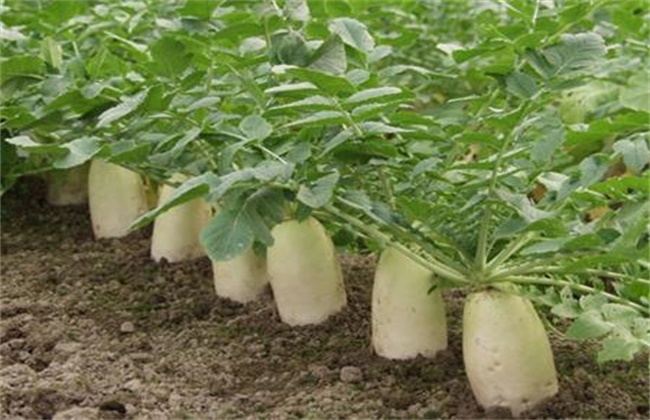
1. Choose seeds carefully
Before introducing new varieties, it is necessary to understand the requirements of different types and varieties for low-temperature vernalization, especially for varieties cultivated in spring. For example, if southern varieties are introduced to the north and planted in early spring, premature bolting is very likely to occur. However, if seeds are introduced from regions with lower temperatures than the local area, premature bolting will not occur. Therefore, careful seed selection must be paid attention to before introduction.
2. Use triple covering
For spring radish cultivation, facilities should be selected for triple covering, that is, on the top film of the arched shed, at a distance of 15 cm, add another layer of plastic film, and then add another film over the ground film. Because ventilation is needed at both ends of the arched shed, the beds should not be too long, and both sides should be compacted with clods of soil. After sowing, during the germination period, keep it closed for insulation without ventilation; during the seedling period, begin ventilation; after thinning and final singling, remove the ground mulch. In terms of temperature management, maintain appropriately high temperatures in the early stage and low temperatures in the later stage, that is, high temperature during the seedling stage to promote seed germination and seedling growth, while also preventing low-temperature vernalization.
3. Strengthen management
Before sowing, plow early, use decomposed organic fertilizer as base fertilizer, and after covering with plastic film, build the shed and cover with film, then sow when the shed temperature stabilizes above 11°C. For sowing, open holes at a row spacing of 25 cm, sow 4-6 seeds per hole, cover with 2-3 cm of soil after sowing, and close the shed after sowing to prevent low temperatures. If the shed temperature exceeds 25°C, ventilate appropriately to cool it down. When there are 5-6 true leaves, carry out thinning and final singling, leaving one plant per hole. When the temperature gradually rises, remember to ventilate at noon to lower the temperature. When the fleshy root begins to expand, it is advisable to maintain mainly 18-20°C to prevent excessive growth from high temperatures. When the nighttime temperature is above 10°C, the film can be removed in due course, and then harvesting can begin. If cultivation uses plastic film mulching, the cultivation method is not very different from open-field cultivation, because plastic film mulching can increase ground temperature by 2-3°C and can advance the sowing period by 10-15 days.
The above is an introduction to preventive measures for spring radish bolting. I hope it can help you. To learn more related knowledge, please stay tuned to us.