Field Management Methods and Technical Points for Chickpeas
Chickpea is a leguminous plant. Its seeds can be ground into flour and used as a staple food, and its tender beans and tender leaves can also be eaten as vegetables, so it is quite popular. At present, chickpeas are mainly grown in the northwest and northern regions of our country. When growing chickpeas, if you want them to grow normally, then management work is very important. Therefore, today the editor brings you the field management of chickpeas. Let's take a look below!
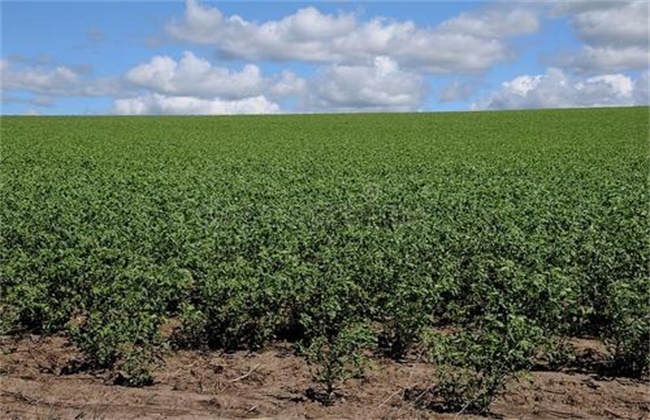
1. Timely thinning of seedlings
When growing chickpeas, we need to do a good job of thinning seedlings during the seedling stage. Although chickpeas do not have very strict requirements for plant and row spacing, and their adaptability is also relatively strong, for chickpea varieties with an upright plant type, suitable planting density is still very important. Generally, the number of plants per square meter should be about 50. If it is a spreading-type variety, then it should be about 33 plants per square meter. Therefore, thinning seedlings is still quite important, and it is the key to providing sufficient growing space for healthy seedlings.
2. Intertillage and weeding
During the seedling stage of chickpeas, their growth amount is relatively small, and they are easily robbed of nutrients by weeds. If a weed-free environment is maintained within two months after sowing chickpeas, then the growth rate of chickpeas speeds up, which is very important for controlling weed growth. Tests have shown that one month and two months after sowing chickpeas are effective periods for controlling weed growth. It can also loosen the surface soil layer and improve soil permeability. It can also cut off the soil capillaries and achieve the purpose of preserving soil moisture.
3. Reasonable irrigation
In most areas where chickpeas are sown in winter, because rainfall is relatively abundant before sowing and during the early growth stage of chickpeas, and soil moisture is also relatively suitable, irrigation is not needed. However, if it is spring sowing or winter sowing in arid areas, then rainfall is relatively low. Chickpea growth is prone to lacking nutrients, so attention should be paid to doing a good job of watering. At about the 5 true leaf stage of chickpeas and at the pod formation stage, these are the critical periods for chickpea water demand. Therefore, at this time, attention must be paid to doing a good job of watering, which is also the key to ensuring high chickpea yields.
4. Scientific fertilization
When fertilizing chickpeas, organic fertilizer or cake fertilizer should be the main type. If only nitrogen fertilizer or potassium fertilizer is applied, the effect is not very obvious. When applying phosphate fertilizer, the application amount should be controlled according to soil conditions and soil fertility. If the soil phosphorus content is low and irrigation conditions are available, then an appropriate amount of phosphorus pentoxide can be applied per mu. Then attention should also be paid to supplementing an appropriate amount of trace elements such as molybdenum fertilizer, which is very beneficial to chickpea yield.
The above is a brief introduction to the field management of chickpeas. That is all for today's introduction. This article is for reference only, and I hope it can help everyone!