Detailed Explanation of Key Points for Spring Fertilization Techniques for Oilseed Rape
After the beginning of spring, oilseed rape enters a period of vigorous reproductive growth and vegetative growth, with an extremely high demand for nutrients, so fertilization must be followed up in a timely manner based on soil, climate and pre-spring fertilization conditions. So how should oilseed rape be fertilized in spring? Let's find out together.
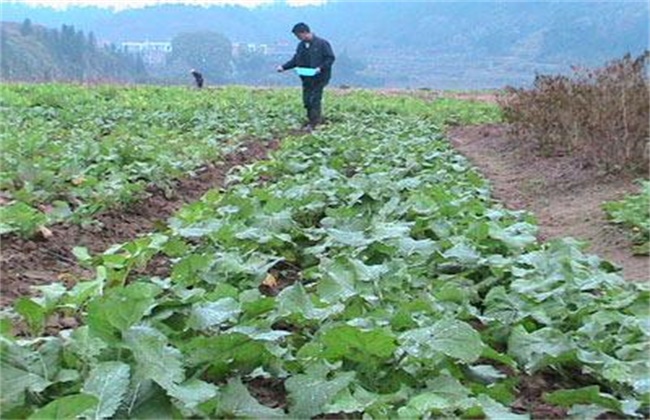
1. Apply spring fertilizer early
Early application of spring fertilizer can promote more branching and early budding in plants that grew insufficiently in winter, especially in oilseed rape fields where base fertilizer was insufficient and winter fertilizer was not applied; early application of spring fertilizer is the key point for achieving high yields. Spring fertilizer is generally applied at 15-20 jin of ammonium bicarbonate per mu, or 6-7 jin of urea dissolved in water and then applied; it must never be applied directly, so as to avoid concentrated fertilizer burning the roots and producing the opposite effect.
2. Apply bolting fertilizer skillfully
The budding and bolting stage of oilseed rape is the key period for spring growth and frame building, when the demand for fertilizer is extremely high, accounting for about half of the fertilizer requirement of the entire growth period. For plots where base fertilizer and winter fertilizer were insufficient and seedlings are weak, it should be applied early and heavily; when the bolt height is 3-5 cm, 750-1000 kg of human excrement and urine, 4-5 kg of urea or 20 kg of ammonium bicarbonate per mu can be applied with water. For plots where seedlings are excessively vigorous, bolting fertilizer should be applied late and lightly, so as to avoid excessive vegetative growth.
3. Supplement with chemical fertilizer
Appropriately supplementing flower fertilizer during the flowering period of oilseed rape can make the plants set more seeds and increase grain number and weight, playing a significant role in increasing yield. When the bolts of oilseed rape grow to 50-60 cm, a sunny and windless afternoon can be chosen to spray flower fertilizer; for plots with poor growth, 300 grams of urea can be mixed into a potassium dihydrogen phosphate solution and sprayed together.
4. Increase application of potassium and boron fertilizer
Increasing the application of potassium fertilizer can enhance the stress resistance, cold resistance, disease resistance and waterlogging resistance of oilseed rape, and after increasing potassium fertilizer application, the yield increase effect is obvious; it is generally applied in February to March, with 150-200 kg of plant ash or 15 kg of potassium chloride broadcast per mu. In addition, the phenomenon of oilseed rape flowering but not setting seed is caused by boron deficiency reducing yield, and applying boron fertilizer can prevent this phenomenon; it is generally sprayed once each at the bolting stage and early flowering stage, with 50-100 grams of borax per mu each time, diluted with 50-60 kg of water before spraying.
The above is an introduction to spring fertilization techniques for oilseed rape. We hope it can help you. To learn more related knowledge, please stay tuned to us.